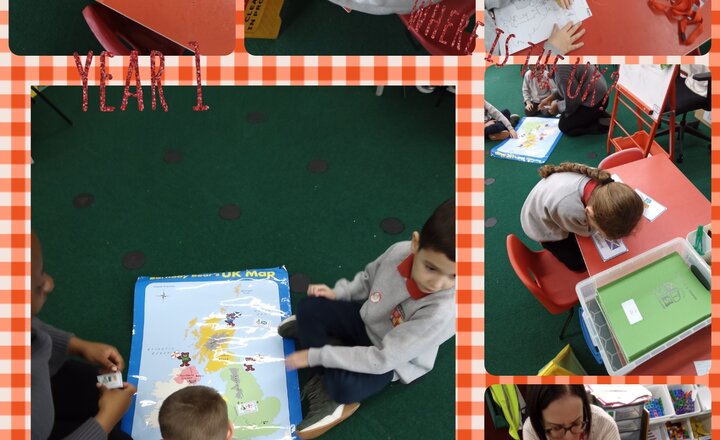
Year 1 - Geography - Where is the UK?
Wait... we live on an island?! There’s nothing quite like the look on a Year 1 pupil's face when they realise that if they keep driving in one direction for long enough, they’ll eventually hit the sea! This week, we’ve been using our Kapow Primary geography units to answer a big question: Where is the UK? It’s been so much fun watching the children huddle around maps and globes. We’ve been: Hunting for the four countries (and debating which one has the coolest flag—Wales usually wins! ). Learning the names of our capital cities. Discovering that we are surrounded by water on all sides. The best part of the lesson? Watching them try to find their own town on the map. Even though we look tiny on a big world map, it really helps them see how we’re connected to the rest of the planet. Geography in KS1 is all about that "lightbulb moment" where the world suddenly feels a little bit smaller and a lot more interesting.
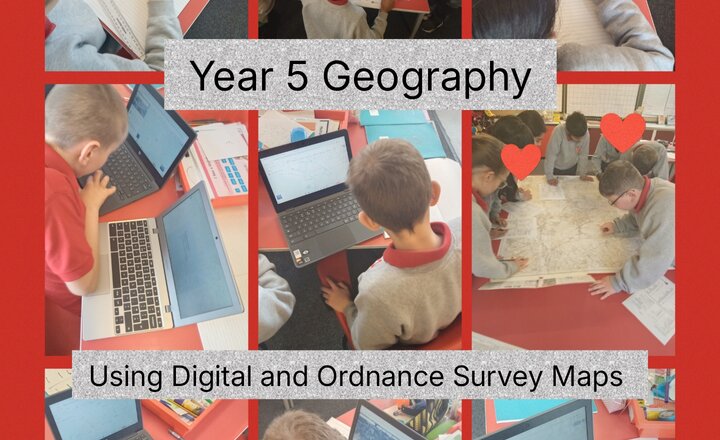
Year 5 Geography - Using Digital and Ordnance Survey Maps
This week in Geography, Year 5 engaged in a detailed comparative study of our local area using both digital maps and Ordnance Survey (OS) maps. We began our search using Google Maps to identify key human features in our locality, compiling a comprehensive list of tourist spots, leisure facilities, restaurants, bars, transport hubs, and hotels. Students then transferred these analytical skills to the OS maps of Darwen, using the specific OS symbols key to locate and interpret a wide variety of different points of interest, finding the activity highly rewarding and a lot of fun!
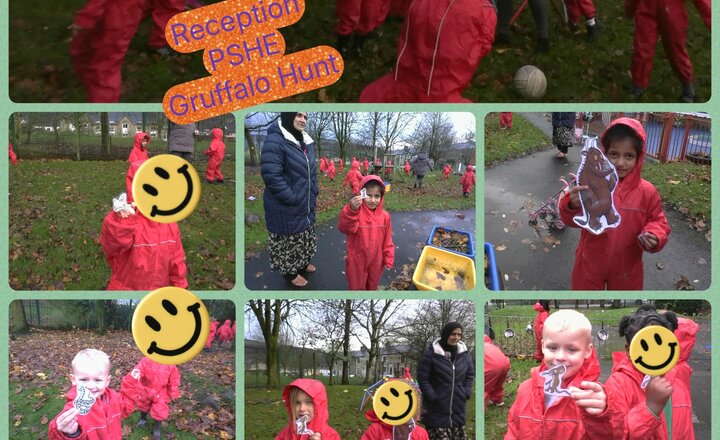
Reception- PSHE-Gruffalo Hunt
This week, Reception class stepped into the deep dark wood and enjoyed an exciting, cross-curricular Gruffalo Hunt! We used our investigative skills to search around the school grounds for the familiar characters from Julia Donaldson's much-loved story. The children were thrilled to spot the fox, the owl, the snake, and, of course, the fearsome Gruffalo himself! Following our successful hunt, we gathered to discuss the story's true hero: the little Mouse. We talked about how the Mouse used his wits and bravery to outsmart all the bigger, scarier animals. The children were brilliant at identifying what it means to be brave, even when you are feeling a little scared. The highlight of the discussion was sharing our own personal stories. Each child had a chance to talk about a time they were brave—whether it was trying a new food, going on a tall slide, or sleeping without their nightlight. It was wonderful to see the children supporting each other and celebrating their courage! This activity was a fantastic way to combine our literacy skills with our Personal, Social, and Emotional Development (PSED), helping us understand that even the smallest among us can be the bravest.
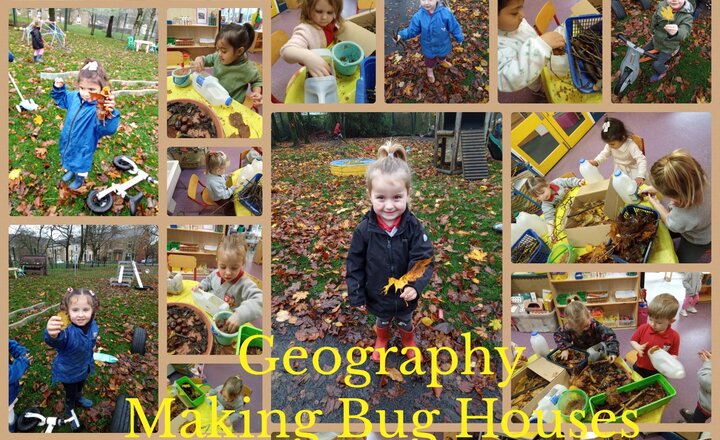
Pre-School-Geography- Making Bug Houses
This week, pre-schoolers embraced nature by creating wonderful bug houses! To ensure all the tiny creatures stay warm this winter, the children diligently collected various natural materials for their constructions. This activity sparked great conversations, as the children eagerly discussed with their peers which creepy crawlies might choose to take up residence in their newly built homes.
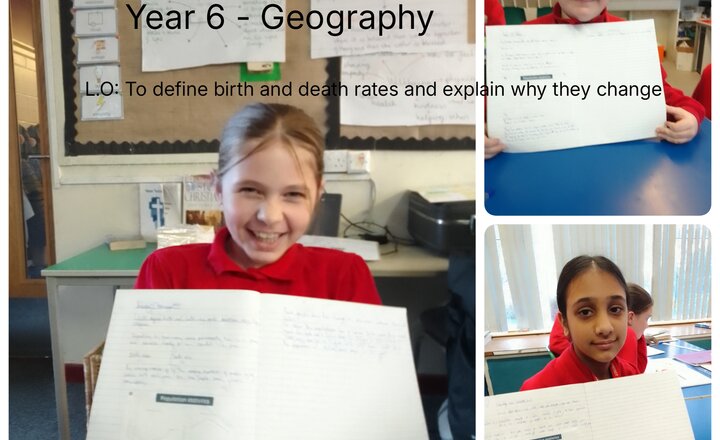
Year 6: Geography - Population
This week year 6 have been learning about how birth and death rates can affect the population of an area. They analysed data shown on a graph for two countries, and thought about other reasons for how and why the population may fluctuate.
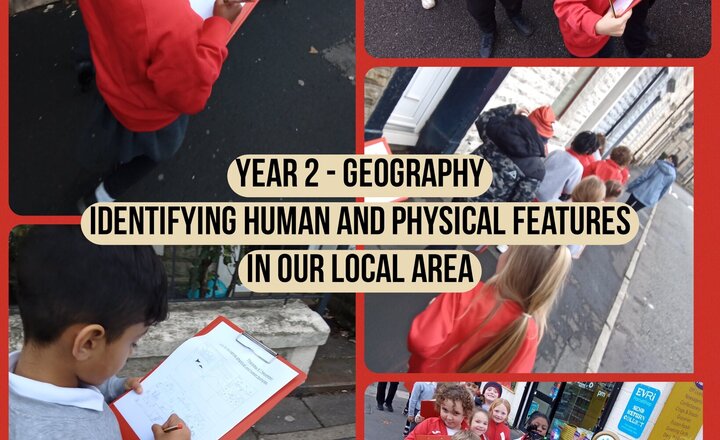
Year 2 - Geography - Human and Physical Features
Geography Walk: Exploring Our Local Area! Year 2 put on their walking shoes this week and became local geography experts! We ventured out into our neighbourhood to identify a variety of human and physical features. The children did a fantastic job distinguishing between natural elements and man-made structures. During our walk, we were able to spot key human features like houses, shops, and speed bumps, alongside physical features such as fields and hills.
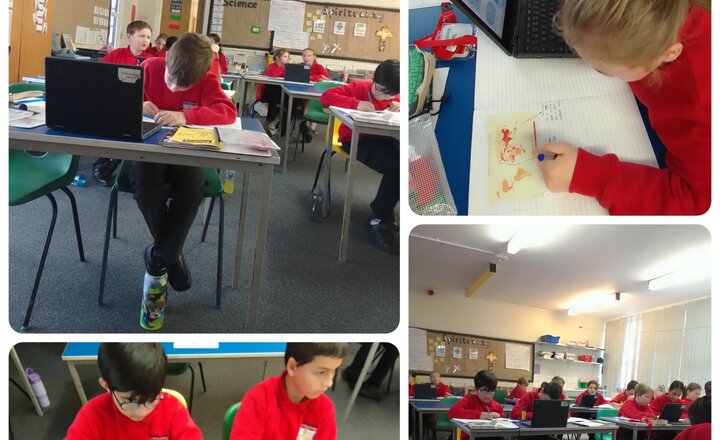
Year 6: Geography - Population
In Geography year 6 have started their unit learning about population. This week we learnt about population density, and looked at different countries around the world and their population density. L.O: To understand population density.
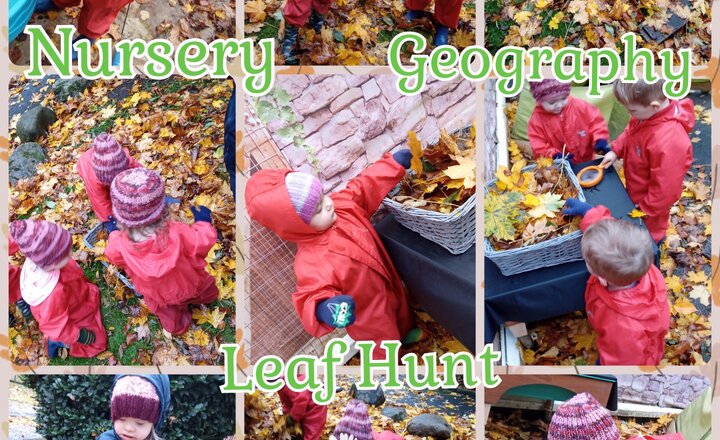
Nursery - Geography - Leaf Hunt
Inspired by our story this week, the nursery class embarked on a fascinating leaf hunt outdoors. The children immediately observed that the ground was covered in a thick layer of leaves, which sparked a natural geographical discussion: "Why are the leaves on the ground?" and "Where did they come from?" This curiosity led to a key observation about seasonal change. The children looked up and noticed that the trees, which had been full of leaves, were now largely bare. This visible change from leaves on the tree to leaves on the ground provided a concrete lesson in the cycle of nature and the concept of where materials originate. We then searched enthusiastically for leaves of different colours, shapes, and sizes, carefully collecting them to use as natural resources for our other work taking place in class. This hands-on exploration linked observation of the local environment directly to classroom learning.
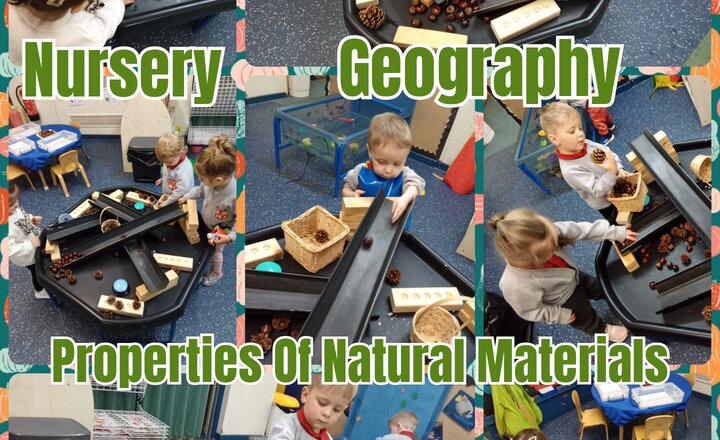
Nursery - Geography - Properties Of Natural Materials
Nursery class have been exploring the properties of foraged natural materials—pinecones and conkers. The activity began with practicing anticipation skills using a clear "Ready, Steady, Go!" cue to release the objects down the pipes. The children quickly discovered a key difference, the conkers rolled down the entire length of the pipe, but the pinecones stopped short and got 'stuck'. This led to a discussion about the physical characteristics of the materials. The children were prompted to feel each item, noting that the conker was smooth, while the pinecone was spikey, which stopped it from rolling. The experimentation then moved to exploring cause and effect by adjusting the slope of the drainpipes. The children used blocks to make the pipes higher or lower, observing how the incline affected the speed of the rolling objects. Then they raced the two materials, further working on their understanding of how a material's shape and texture influence its movement. This was a rich, hands-on lesson about the physical world around them.
.jpg)
Year 4 Geography - Gathering Data
In our Geography lessons, Year 4 have been learning all about the Amazon Rainforest and what it is used for. We have linked our forests and woodlands to be the closest match to the rainforest and have been collecting information in a variety of formats to find out what we use our forests and woodlands for. We will then compare this to the Amazon rainforest when we present our findings next lesson. We have made some interesting predictions and are looking forward to find out what our data will tell us!
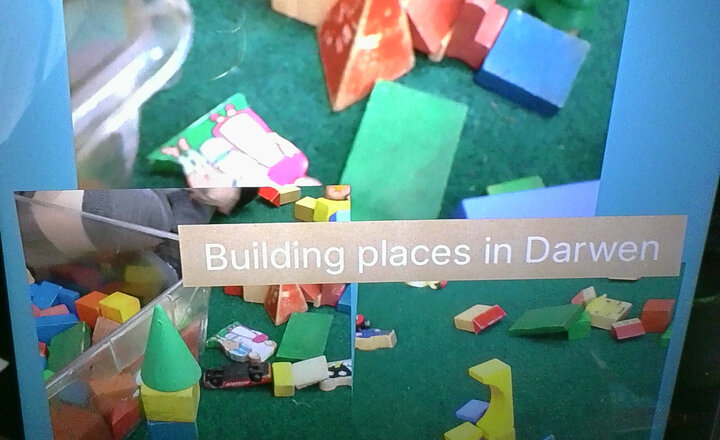
Year 1 - Construction - Places in Darwen
The children used building blocks to create a variety of structures and places in Darwen,. The collage shows different creations, including the Darwen Tower and local houses.
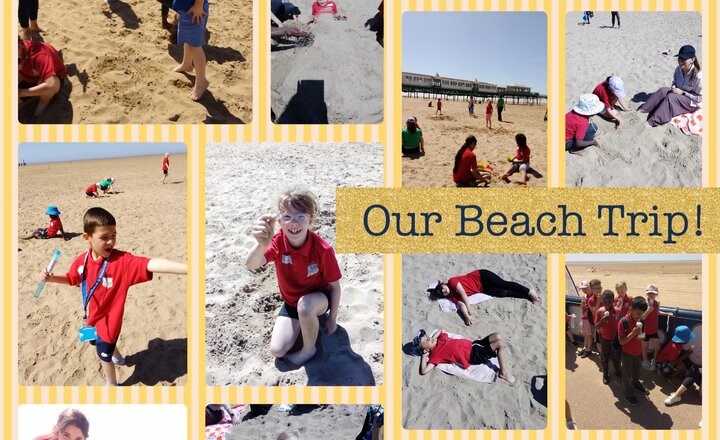
Year 2 Beach Trip
What a fantastic beach trip our children had! The collage captures their joy as they played in the sand, built sandcastles, relaxed by the water, and explored the seaside. We had an amazing trip together, the children had delicious ice cream, played with bubbles and created amazing memories.
.png)