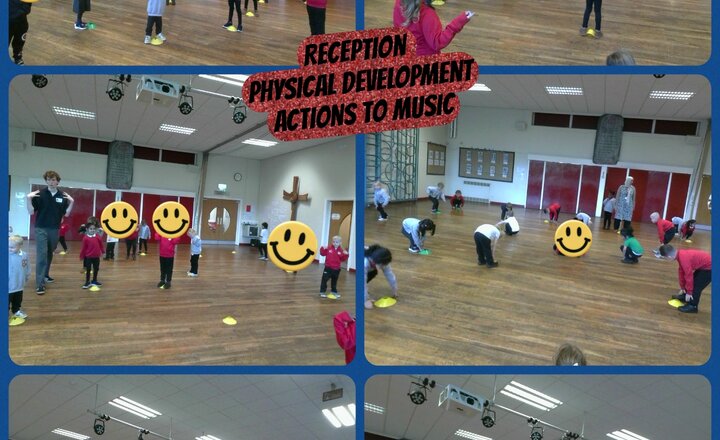
Reception- Physical Development- Actions to Music
The Reception children have been enthusiastically taking part in a fun and active unit on Dance during their Physical Education (P.E.) lessons. This unit has been a wonderful way to develop their gross motor skills, coordination, and rhythm through musical movement.The class has been focusing on creating movements to the familiar and catchy tune, "Head, Shoulders, Knees, and Toes." Understanding Body Parts: The song naturally reinforces their knowledge of major body parts, which is a great cross-curricular link. Following Instructions: The children are practicing listening skills by moving in time to the music and stopping or starting as the song dictates. Developing Coordination: As they follow the sequence of touching their head, shoulders, knees, and toes, they are actively working on their hand-eye and full-body coordination, trying to maintain balance and control.
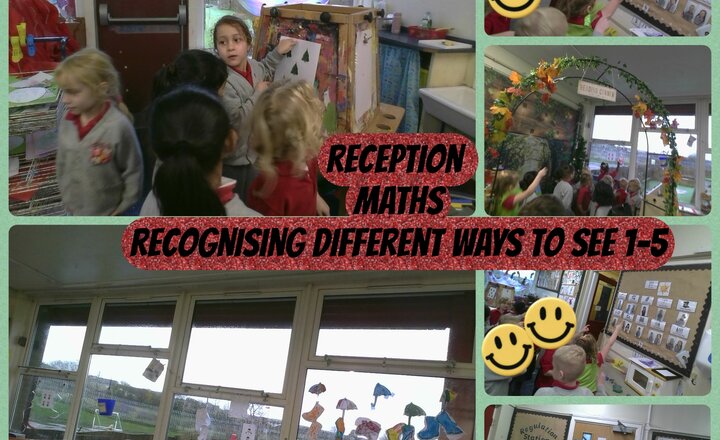
Reception- Maths- Recognising Different Ways To see 1-5
The Reception children have been actively engaged in a fun, festive activity to deepen their understanding of how to represent the numbers 1 through 5. They were tasked with finding the Christmas objects around the classroom, when a number was shown on the screen they went to find that amount of objects. Once found the children demonstrated the concept of each number in multiple ways, using their fingers or the dice. This hands-on, multi-sensory approach ensures a strong foundation in early number sense, helping them to connect the abstract numeral to concrete quantity and different forms of representation.
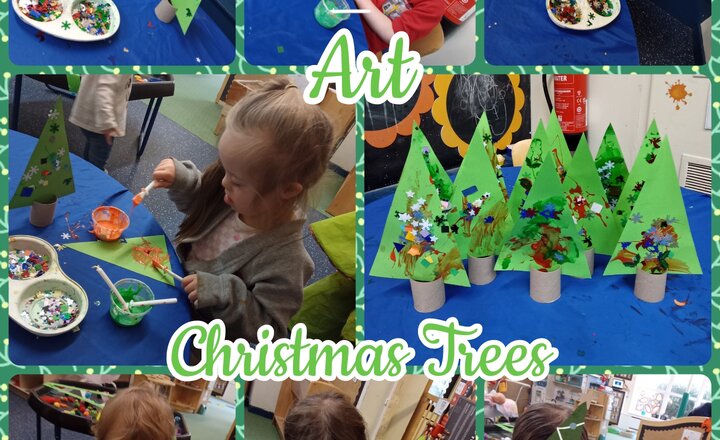
Nursery - Art - Christmas Trees!
To kick off our Christmas preparations this week, the children accessed the craft table for our first festive project: creating Christmas trees! Each child was given a green triangle template to decorate. They used multicoloured glue and various Christmas sequins, carefully selecting which sparkly additions they wanted to use on their tree. This activity provided excellent practice in fine motor control and encouraged intentional design as they chose and placed each small sequin. The children particularly enjoyed the sense of community when they saw all of their completed trees standing up together, proudly spotting their own creation within the "magical forest" they had collectively created.
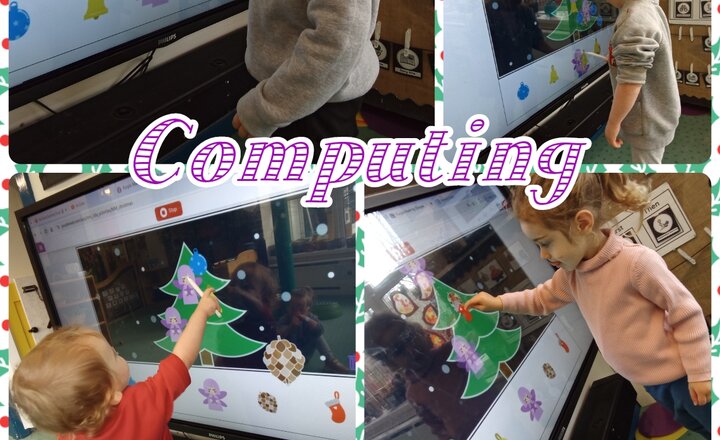
Nursery - Computing - Drag And Drop
This week, we moved beyond digital mark-making to introduce the new skill of drag and drop. Using an interactive screen, the children decorated a digital Christmas tree. The challenge focused on executing the new skill with precision. Children were encouraged to use their index finger or board pen for slow, controlled movements: picking up decorations, moving them to the tree, and accurately releasing them. This exercise successfully enforced precision and control, vital components of digital literacy. By practicing the sequence of pressing, holding, moving, and releasing, the children made great progress in mastering the 'drag and drop' function.
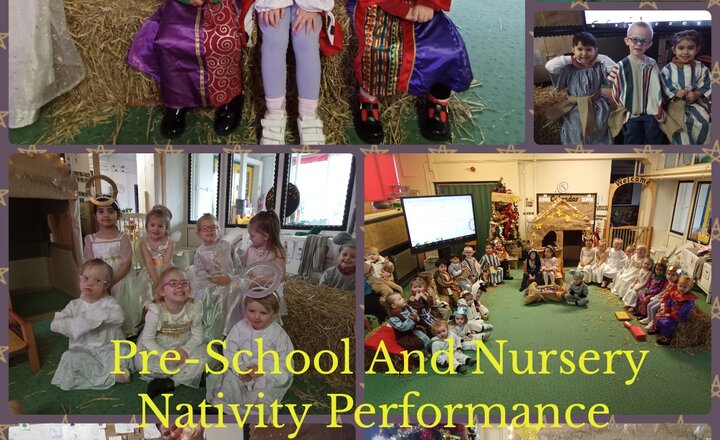
Pre-School-Our Nativity Performance
What an absolutely wonderful treat we had! Our brilliant pre-school and nursery children performed their annual Nativity play, and we could not be more proud. They were all so confident and amazing standing up in front of all the grown-ups, telling the Christmas story with such enthusiasm and charm. Every single child remembered their lines, sang their hearts out, and truly brought the magic of Christmas to life!
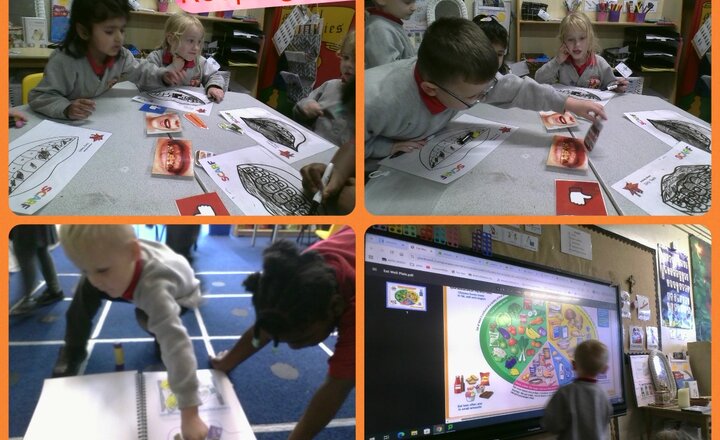
Reception- PSHE-Healthy Eating
In our PSHE lesson, our wonderful Reception children became super Healthy Eating Experts! We focused on learning all about healthy eating and making good choices to keep our bodies strong and full of energy. Introducing the Healthy Food Plate We used the Healthy Food Plate (sometimes known as the Eatwell Guide) to help us understand the different types of food and how much of them we should eat. It was a fantastic visual tool! The children learned that foods can be sorted into groups, and that some foods are like 'everyday fuels,' while others are 'sometimes treats.' We had a brilliant hands-on activity where the children worked together to sort various food pictures onto the plate. They had to decide: ✅ Good Choices: Foods we should eat lots of every day (like fruits, vegetables, and starchy foods). ❌ Sometimes Choices: Foods we should only eat in small amounts and not all the time (like sugary sweets, fizzy drinks, and some processed snacks). It sparked great discussions! We talked about why milk and water are the best drinks, and how crunchy carrots and juicy apples help us grow big and strong.
.jpg)
Pre-School-Literacy-Story Map
In literacy, we’ve been enjoying We’re Going on a Bear Hunt. The children worked together to create a story map, marking out the key events from beginning to end. Everyone added their own part, drawing the moment they remembered came next in the story. They were completely absorbed in the task, and it sparked lots of rich vocabulary. I was really impressed with how much they could recall.
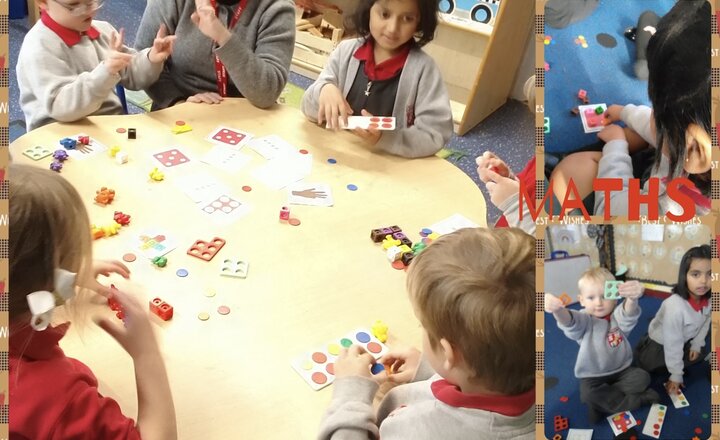
Reception Maths: Exploring 4 and 5
Our children have been getting to know the numbers 4 and 5 through lots of practical work. The photo shows them deep in conversation, comparing finger patterns, building sets with cubes and counters, and using numicon to spot number arrangements. There was plenty of talk around the table as they checked their counting, noticed patterns and explained how they knew they had the right amount. Activities like these help them see number in different forms and build real confidence with early counting. It’s lovely to see how much teamwork and focus they bring to these sessions.
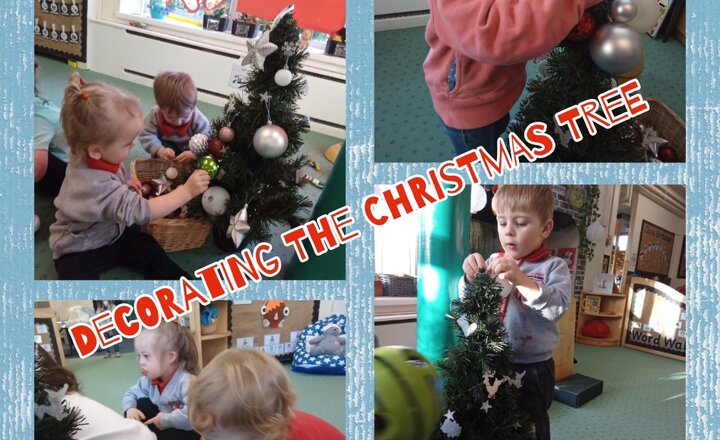
Nursery - Communication And Language - Decorating The Christmas Tree
The children in nursery class were full of excitement this week as we marked the start of the Christmas countdown by decorating our Christmas tree. This activity became a rich foundation for developing communication and descriptive language. While using their fine motor skills to carefully hang the decorations, the children spontaneously engaged in conversation, actively discussing the different sizes, shapes, and colours they could see. This provided a natural opportunity to expand their descriptive vocabulary. Furthermore, the excitement prompted the children to share personal experiences, talking about their own Christmas trees at home and sharing their thoughts and knowledge about Santa. The activity successfully promoted peer-to-peer communication and the sharing of imaginative ideas.

Pre-School- P.E-Ball Skills
In P.E. last week, the children were practising their throwing skills. They worked in pairs, with one child holding a hoop as a target and the other pretending their ball was a snowball to throw through it. They had a great time and worked really well with their partners. Lovely teamwork all round.
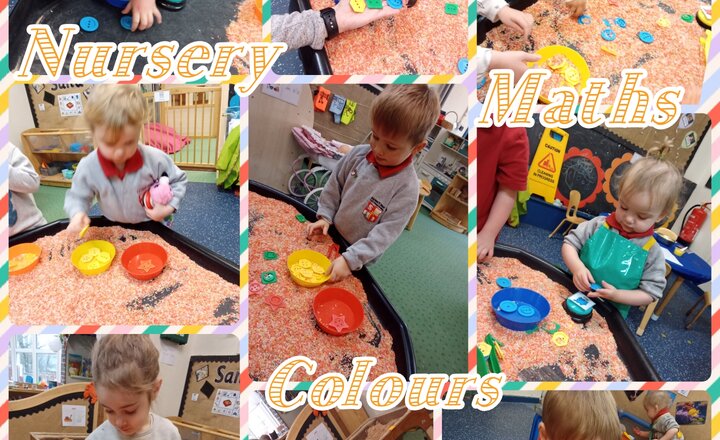
Nursery - Maths - Colours
This maths activity presented the children with multiple rich learning opportunities, all centered around a task of categorising coloured buttons into corresponding coloured bowls. This primary sorting task helped solidify their knowledge of colour, with children encouraged to vocalise the colour name or press the relevant sound button to confirm their selection. While immersed in this focused task, children also had the opportunity to build on their number language and quantity skills. Some successfully counted their buttons, and the activity naturally led to comparing quantity, using early mathematical concepts like 'more' and 'less'. Our older learners showed an extra layer of curiosity, spotting and becoming intrigued by the shaped buttons mixed in, prompting an introduction to different two-dimensional shapes. This simple activity proved highly effective in reinforcing colour, counting, and comparative language simultaneously.
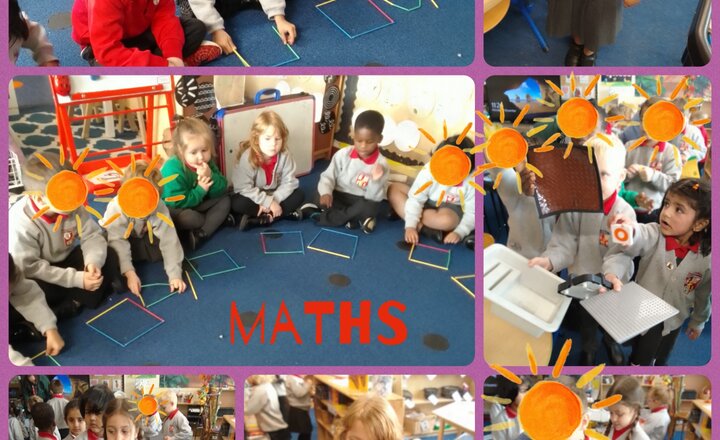
Reception - Maths - 2d Shapes
Our Reception children have been exploring squares as part of our White Rose Maths learning. They looked for squares around the classroom, used sticks to make their own, and talked about what makes a square special. Lots of careful looking, great teamwork and brilliant shape spotting.
.png)