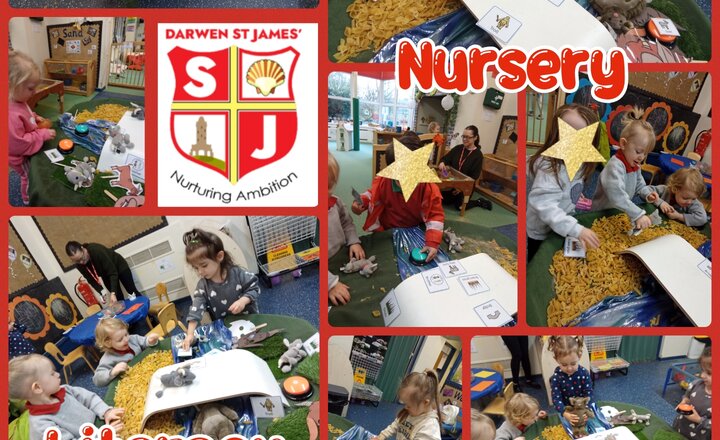
Nursery - Literacy - Story Props
This week, our literacy focus centered on the classic story The Three Billy Goats Gruff. The children used a variety of resources in the malleable tray to bring the narrative to life and deepen their understanding of story structure. To support their retelling, the children were provided with a rich assortment of aids, including puppets, masks, and soft toy teddies. These tools allowed the children to take on different roles, experimenting with key phrases from the book, such as the famous "Trip, trap, trip, trap!" as the goats crossed the bridge. To ensure the activity was inclusive and accessible for all learners, we integrated sound buttons which provided auditory prompts for the children to hear and repeat key parts of the story. We also utilized Widgits to offer visual symbols that helped the children sequence the events and recognize important vocabulary. Through this interactive play, the children demonstrated a growing grasp of narrative sequencing and gained confidence in using expressive language to communicate the story to their peers.
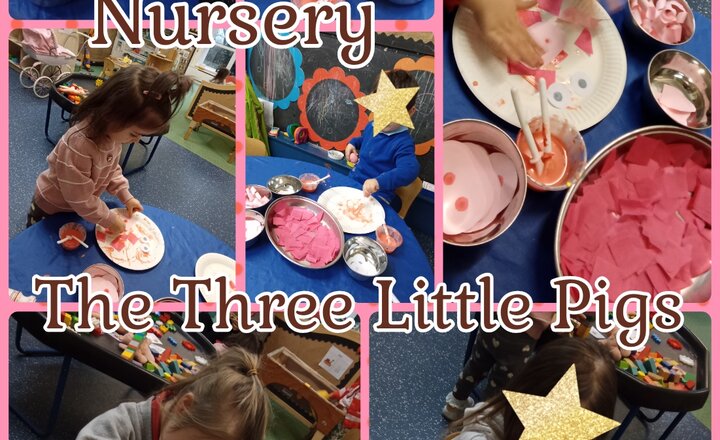
Nursery - Art - The Three Little Pigs
This week, the children visited the craft table to create their own pigs, directly linking to our core story, The Three Little Pigs. The process began with a paper plate as a base. The children practiced their spreading skills using pink PVA glue to create an even layer for their design. They then used their fine motor skills to carefully pinch and place pink tissue paper to cover the pig's face. To add the features, including eyes, a nose, ears, and a curly tail, the children used their own faces as a reference to determine the correct quantity of each item needed. This encouraged them to identify and count the features before placing them onto their pigs. This activity successfully combined creative expression with early mathematical counting and a better understanding of their own physical features.
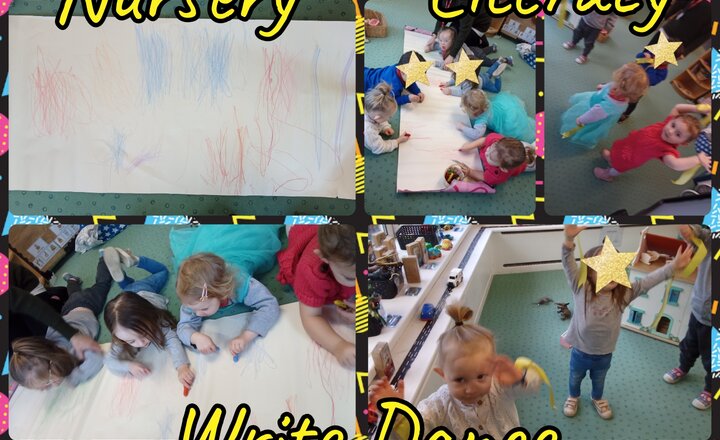
Nursery - English - Write Dance
This week, the nursery class began their 'Write Dance' journey, a program designed to bridge the gap between large physical movements and early writing skills. We started with a focus on gross motor movement using the classic song 'The Grand Old Duke of York' as our guide. The children used ribbons to mirror the lyrics, moving their arms in large up and down motions. They were highly engaged, enjoying the visual feedback of the ribbons trailing through the air as they controlled their movements to match the rhythm of the music. To transition these movements toward literacy, the children then used their core muscles to lie on their tummies, a position that builds the shoulder stability necessary for writing. On large paper, they worked to recreate those same up and down movements, observing how their physical actions left marks on the page. This process was vital for helping the children give meaning to their movements, turning a physical dance into a purposeful mark-making experience.
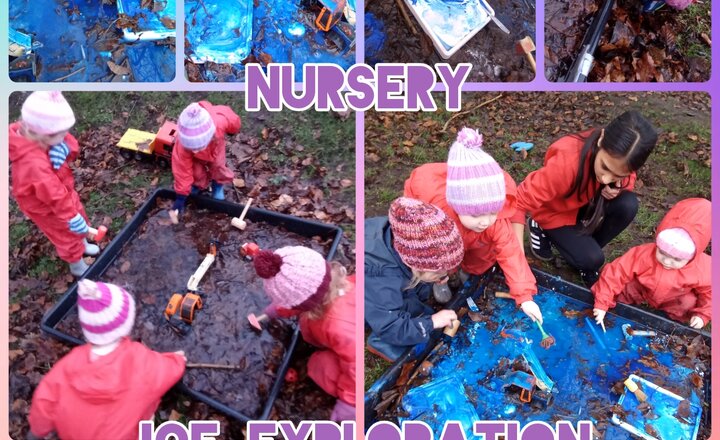
Nursery - Geography - Science - Ice Exploration
This lesson was sparked by the children's natural curiosity during outdoor play, when they discovered vehicles "stuck" in the ice. This led to a focused exploration on Friday, where the children set off into the garden equipped with tools like hammers and forks to "save" the frozen vehicles. The children demonstrated fantastic teamwork as they worked together to hit and scrape the ice. This provided a great opportunity for them to observe the physical properties of materials; they noticed that the ice was hard and were fascinated by the cracking sounds and visual patterns as it began to break apart. Their excitement grew as they successfully freed the cars from the ice. The children observed a change in state compared to yesterday, noticing that there was now water in the tray. This sparked a meaningful conversation about ice melting, which they explored further by splashing in the water. To enhance the sensory experience and encourage further investigation, the children were supplied with paint and textured brushes to mark-make directly onto the remaining ice and in the water, combining scientific observation with creative expression.
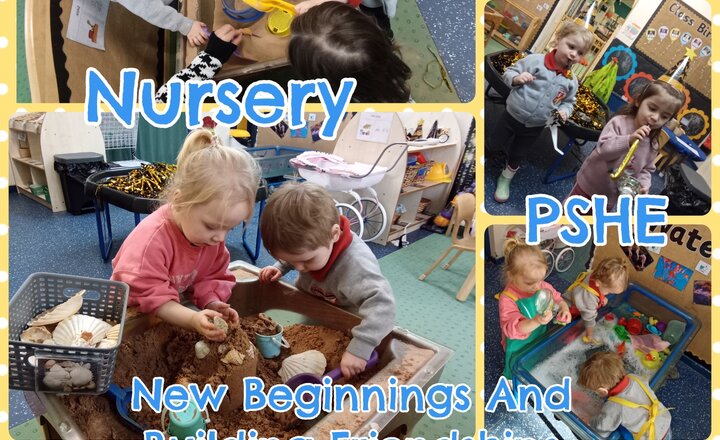
Nursery - PSHE - New Beginnings And Building Friendships
This week, our PSHE focus centered on Personal, Social, and Emotional Development as the children returned for the new half term. There was a sense of excitement as they explored the classroom and new learning opportunities. A key theme throughout the week was the concept that "sharing is caring." The children worked beautifully together when playing with the new resources, demonstrating patience and cooperation. They were particularly welcoming as we greeted new classmates joining the nursery for the first time. The children showed great empathy as they witnessed a range of emotions in the classroom. They were incredibly supportive, offering comfort to their new friends through kind gestures, such as giving a cuddle or offering a toy as a distraction. By inviting their new peers into their play, the children have already begun to form lovely new friendships, showing a wonderful understanding of inclusion and kindness.
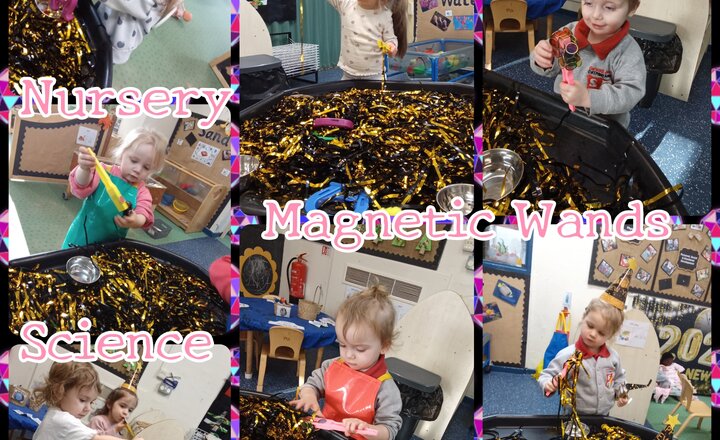
Nursery - Science - Magnetic Wands
To celebrate the New Year, the nursery class engaged in a hands-on science exploration involving magnetism and hidden treasures. The children accessed the malleable tray, which was filled with a festive mix of black and gold foil. Their task was to use an assortment of shaped magnets to search for hidden gems buried deep within the tray. This activity provided a fantastic introduction to the concept of attraction and magnetic force. A surprising discovery occurred as the children worked, once they acquired a gem, strips of shiny foil also attached themselves to the magnets. The children were delighted to see their magnets transform into magic wands covered in tinsel-like foil. They showed great curiosity and persistence, excitedly exploring the textures of the foil and seeing how many gems they could capture using their tools. This lesson successfully combined sensory play with an early understanding of how magnets interact with different materials.
.jpg)
Nursery - Maths - Making Reindeer Food
Our Maths focus centered on practical counting and following instructions involving quantity through an engaging activity: making personalized 'reindeer food' in the malleable tray. The children used oats as a base and added various other ingredients to create their unique mixtures. The core learning involved number language and one-to-one correspondence as the children focused on scooping specific numbers of ingredients, such as giving the reindeer 'one scoop of snow' or 'two scoops of glitter.' This highly motivating task provided excellent practice in counting and following numerical instructions. They then used spoons to transfer their finished creations into small bags to take home, ready for Christmas Eve. This entire process also provided rich practice in developing fine motor control through scooping and transferring.
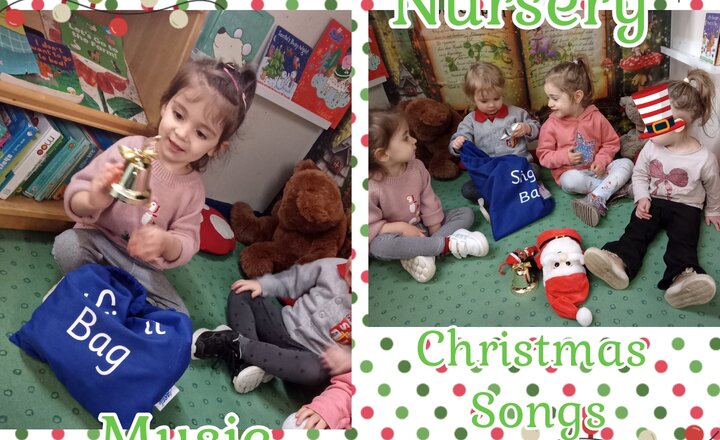
Nursery - Music - Christmas Songs
This week, our music lessons centered around seasonal exploration through our Christmas Song Bag. This activity was highly engaging and encouraged early decision-making and participation. The children thoroughly enjoyed the element of surprise and choice, taking turns to select an item from the bag, which prompted a new seasonal song. They have been enthusiastically learning the new songs and the actions that pair with them. This activity successfully develops memory skills, listening and attention, and rhythm, all while building their confidence in singing and moving in response to music.
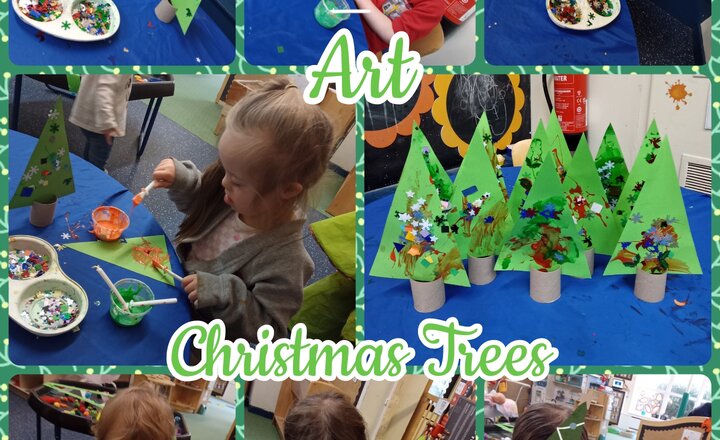
Nursery - Art - Christmas Trees!
To kick off our Christmas preparations this week, the children accessed the craft table for our first festive project: creating Christmas trees! Each child was given a green triangle template to decorate. They used multicoloured glue and various Christmas sequins, carefully selecting which sparkly additions they wanted to use on their tree. This activity provided excellent practice in fine motor control and encouraged intentional design as they chose and placed each small sequin. The children particularly enjoyed the sense of community when they saw all of their completed trees standing up together, proudly spotting their own creation within the "magical forest" they had collectively created.
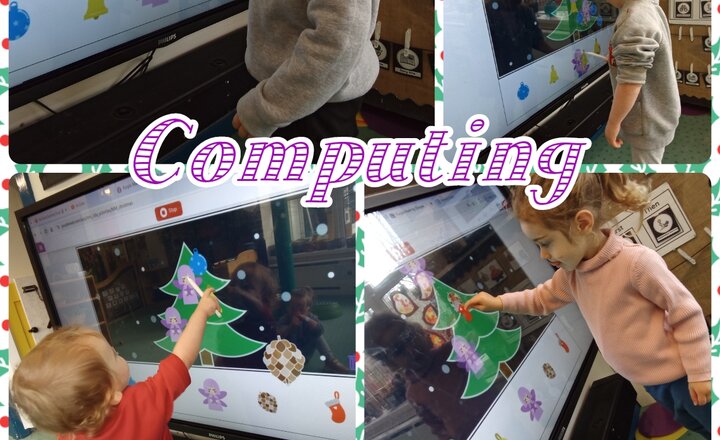
Nursery - Computing - Drag And Drop
This week, we moved beyond digital mark-making to introduce the new skill of drag and drop. Using an interactive screen, the children decorated a digital Christmas tree. The challenge focused on executing the new skill with precision. Children were encouraged to use their index finger or board pen for slow, controlled movements: picking up decorations, moving them to the tree, and accurately releasing them. This exercise successfully enforced precision and control, vital components of digital literacy. By practicing the sequence of pressing, holding, moving, and releasing, the children made great progress in mastering the 'drag and drop' function.
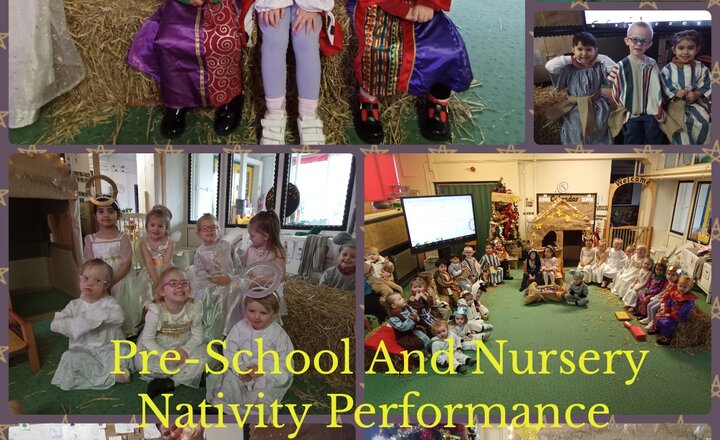
Pre-School-Our Nativity Performance
What an absolutely wonderful treat we had! Our brilliant pre-school and nursery children performed their annual Nativity play, and we could not be more proud. They were all so confident and amazing standing up in front of all the grown-ups, telling the Christmas story with such enthusiasm and charm. Every single child remembered their lines, sang their hearts out, and truly brought the magic of Christmas to life!
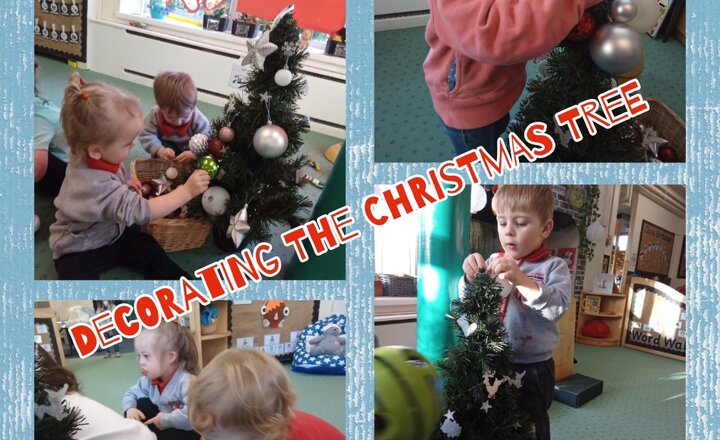
Nursery - Communication And Language - Decorating The Christmas Tree
The children in nursery class were full of excitement this week as we marked the start of the Christmas countdown by decorating our Christmas tree. This activity became a rich foundation for developing communication and descriptive language. While using their fine motor skills to carefully hang the decorations, the children spontaneously engaged in conversation, actively discussing the different sizes, shapes, and colours they could see. This provided a natural opportunity to expand their descriptive vocabulary. Furthermore, the excitement prompted the children to share personal experiences, talking about their own Christmas trees at home and sharing their thoughts and knowledge about Santa. The activity successfully promoted peer-to-peer communication and the sharing of imaginative ideas.
.png)