Image of Nursery - Art And Design - Sensory Play Ice-Creams
10 Jul

Nursery - Art And Design - Sensory Play Ice-Creams

The children showed delight and engagement with the shaving foam. Their initial response was tactile, poking, squishing, and spreading the foam, exploring its texture directly. The activity quickly transitioned into imaginative play as children began making "ice creams." They demonstrated developing hand-eye coordination and fine motor control by actively scooping foam into cones and cups. Using shakers to add "sprinkles" further refined their fine motor skills through precise grasp and release. Rich imaginative role-play emerged, with children offering their foam creations to peers and adults, exclaiming "Yummy!" or "Ice cream!" This showed budding communication and language skills and engagement in pretend scenarios.

Image of  Pre-School - Expressive Art And Design - Creative Play - Making Rockpools
10 Jul

Pre-School - Expressive Art And Design - Creative Play - Making Rockpools

In Pre-school this week our story is- Sharing a Shell, the children have really enjoyed this story especially learning about rockpools. The children created their own rockpool in our sand tray, selecting different materials such as rocks, wood, shells, twigs and pinecones. They created a circle shape in the sand and built a wall around their shape using these materials and then I poured water into their rockpool to see if their wall would hold the water or would the water pour out. This type of hands-on, imaginative play directly supports several EYFS learning areas: Understanding the World: Children explore a miniature ecosystem, learning about marine life, natural habitats, and different materials. They might discuss where rockpools are found, what creatures live in them, and the characteristics of various natural elements. Communication and Language: As children create and interact with their rockpool, they naturally engage in conversations. They might describe what they are doing, ask questions, explain their choices of materials, and even create stories about the creatures living in their rockpool. This enhances their vocabulary, listening skills, and ability to express ideas. Physical Development (Fine Motor Skills): Manipulating different materials like sand, pebbles, shells, and water helps to develop fine motor skills, hand-eye coordination, and dexterity. Scooping, pouring, arranging, and picking up small objects strengthens the muscles in their hands and fingers. Expressive Arts and Design: Children are using their imagination and creativity to design and construct their rockpool. They are making choices about materials, textures, and arrangements, essentially creating a miniature world. This also allows for sensory exploration as they touch and feel different elements. Personal, Social and Emotional Development: If children are working together, they develop social skills like sharing, taking turns, and collaborating. The open-ended nature of the activity also allows for emotional expression and can be a calming, sensory experience. Mathematics: Children might engage in early mathematical concepts by sorting materials (e.g., by size, type), counting shells or pebbles, or discussing quantities of sand and water. Problem-Solving Skills: Children might encounter small "problems" to solve, such as how to make the water stay in a certain area or how to arrange the rocks to create a sheltered spot.

Image of Reception - Art and Design - Creating Bikes!
9 Jul

Reception - Art and Design - Creating Bikes!

This week, Reception have been using their artist’s eyes to create something extra special! Inspired by Mrs Armitage on Wheels by Quentin Blake, we designed and made our own spectacular bikes – each one bursting with colour, creativity and imagination. We paid close attention to shape, texture and detail, using a wide range of materials like buttons, sequins, fabric and pipe cleaners. It was all about looking carefully, making thoughtful choices and expressing our own ideas – just like real artists do. Developing our observational skills helps us in so many areas of learning, from early writing and drawing to science and maths. It’s amazing what you notice when you really stop and look! And just like Mrs Armitage, we’re always thinking about how we can add that little bit extra.

Image of Reception - Maths - Making Maps
9 Jul

Reception - Maths - Making Maps

This week in maths, Reception have been exploring maps – using our maths eyes to spot shapes, patterns and position as part of our White Rose learning. We looked carefully at a simple story map and then worked together to create our own, using big paper, bold colours and brilliant teamwork! The children talked about where things were, using mathematical language like next to, behind, and in front of. They thought about directions and routes, and even explained their maps to others – practising reasoning skills along the way. White Rose encourages us to see maths in the world around us, and map-making is a great way to build those early spatial and positional skills. Plus, it gets us thinking visually and creatively – perfect for young mathematicians with curious eyes!

Image of Nursery - Geography - Exploring Familiar Landmarks From our Community
7 Jul

Nursery - Geography - Exploring Familiar Landmarks From our Community

The children have been exploring the miniature town setup, demonstrating a strong connection to their immediate world. They eagerly selected toy cars and began to drive them around the roads, navigating between the familiar buildings and landmarks. There was clear recognition of the nursery building and the school, with many children pointing and making excited sounds or simple comments like "My nursery!" or "School!" As they drove, children frequently paused their cars at the images of local shops and statues, initiating conversations or responding to adult prompts about their experiences. They used simple words and gestures to indicate where they had seen these places, showing a developing understanding of familiar geographical features in their community. The activity fostered rich opportunities for communication and language, as children shared their personal connections to the landmarks, such as "I go there!" for a shop, or pointing to a statue and looking for adult affirmation. The interactive nature of driving the cars around the 'town' facilitated active exploration and helped children make tangible links between the models and their real-world experiences.

Image of Nursery - Computing - Ice-Cream Creations
2 Jul

Nursery - Computing - Ice-Cream Creations

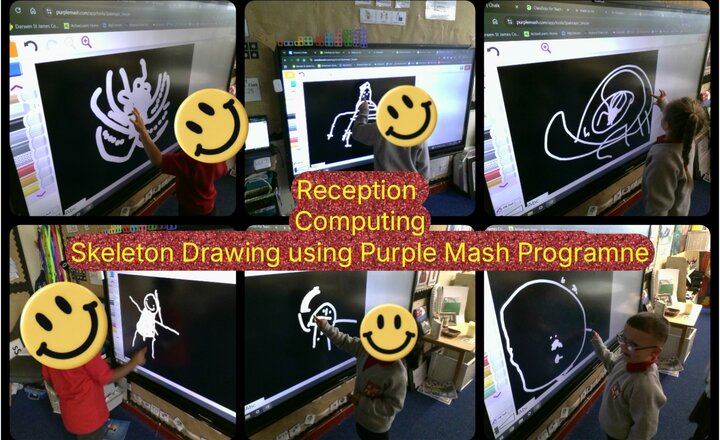
The children approached the interactive whiteboard with high levels of curiosity and engagement, particularly with the vibrant colours and responsiveness of the Purple Mash drawing function. For the newer class members, the activity provided a foundational experience in early digital literacy. These children primarily focused on the cause and effect relationship between their physical movements and the marks appearing on the screen. They explored moving their hands across the board, watching lines and scribbles appear, demonstrating an initial understanding that their actions directly influenced the digital output. Their movements were broad and experimental, indicating the very first stages of control over a digital tool. The older and more experienced children in the class exhibited more refined digital literacy skills and intentionality. These students actively attempted to control their movements to achieve specific shapes, notably working on creating circular motions to form ice cream scoops. Their engagement also extended to thinking about their design, verbally contemplating and selecting virtual "toppings" for their ice creams e.g., "I want sprinkles!", "Strawberry on top!". This demonstrated developing digital dexterity, early planning skills, and the ability to integrate imaginative ideas with the available digital tools. Overall, the activity successfully catered to a range of developmental stages, allowing all children to explore digital mark-making at their own level while fostering early computing and creative expression.

Image of  Pre-School-Understanding The World-Harvesting
1 Jul

Pre-School-Understanding The World-Harvesting

This week in understanding the world we have been looking at harvesting, What can be harvested?, who harvests them? and why we harvest fruit and vegetables. "Harvesting" in the Early Years refers to engaging young children in activities related to the gathering of crops, fruits, and vegetables. It's a fantastic way to introduce them to concepts of nature, food, and the wider world. Key Learning Areas in EYFS Covered by Harvesting Activities: Understanding the World: The Natural World: Learning about plant life cycles, where food comes from, the importance of water and sunlight, and the role of insects. People, Culture and Communities: Understanding how farms provide food, the concept of a harvest festival, and the idea of sharing and gratitude. Physical Development: Fine Motor Skills: Planting small seeds, picking berries, husking corn, using child-friendly gardening tools. Gross Motor Skills: Digging, carrying baskets, moving around a garden or outdoor space. Personal, Social and Emotional Development: Managing Self: Developing patience as they wait for plants to grow, taking responsibility for caring for plants. Self-Regulation: Sharing tools, taking turns. Building Relationships: Working cooperatively with peers and adults. Communication and Language: Listening, Attention and Understanding: Following instructions for planting and harvesting. Speaking: Describing textures, smells, and tastes of harvested items, discussing what they are doing. Mathematics: Number: Counting fruits, vegetables, or seeds; measuring quantities of soil or water. Shape, Space and Measure: Sorting by size, comparing quantities. Expressive Arts and Design: Creating with Materials: Making fruit/vegetable prints, collages with seeds, designing scarecrows. Being Imaginative and Expressive: Role-playing a farmer or market stall holder. Harvesting Activities for EYFS: Real Garden Harvesting: Planting and Growing: If possible, have a small garden patch where children can plant seeds (e.g., beans, cress, sunflowers) and care for them. The ultimate harvesting experience! Picking: Picking ripe fruits (strawberries, raspberries) or vegetables (peas, cherry tomatoes) they have grown. Root Vegetable Digging: Burying vegetables like potatoes or carrots in a sensory bin filled with soil or compost for children to "dig up."

Image of  Pre-School-Expressive Art And Design-Making snails.
1 Jul

Pre-School-Expressive Art And Design-Making snails.

At the workshop table this week we have been creating snails using a range of materials, this is linked to our story The Snail and The Whale.

Image of Nursery - Science - Exploring Textures In The Sand
30 Jun

Nursery - Science - Exploring Textures In The Sand

The children in Nursery class actively explored the materials with their hands, running sand through their fingers and picking up the feathers. This demonstrated strong curiosity and active exploration. As they explored, children spontaneously generated descriptive words for the textures they encountered. Several children were heard saying "fluffy" when touching the feathers and "soft" when feeling the fine sand. When adults modelled words like "bumpy" and "smooth", while touching shells, these words were frequently repeated by the children, showing developing listening and understanding skills and an expansion of their descriptive vocabulary. Children also engaged in various actions with the materials, such as sprinkling sand over the feathers and shells, and examining the intricate patterns on the shells. This hands-on interaction allowed for direct observation of material properties and fostered a deeper sensory understanding of their immediate environment. The activity successfully provided rich opportunities for sensory exploration and language development around textures.

Image of Let’s Talk Dummies – Helping Your Pre-Schooler Get Ready to Talk and Learn
27 Jun

Let’s Talk Dummies – Helping Your Pre-Schooler Get Ready to Talk and Learn

Dummies can be really helpful when children are little, especially for comfort and sleep. But as they grow and get ready for nursery or school, dummies and bottles can start to get in the way of their talking. Using a dummy too much can make it harder for children to: • Babble and practise new sounds • Move their tongue properly for clear speech • Develop teeth and mouths in a way that supports speaking All of these things are really important as children build their confidence with talking, listening and joining in – key parts of being ready for school. How can you help? • Try to keep dummy use just for sleep times • Take the dummy out when your child is playing, exploring or talking • Start to reduce dummy use gradually – and aim to stop altogether before they turn 2 If you’re not sure where to start or would like some ideas, just ask a member of staff – we’re always happy to help. Together, we can support every child to find their voice and feel confident for their next steps. ????????

Image of Pre-School- Physical Development- Making Marks
26 Jun

Pre-School- Physical Development- Making Marks

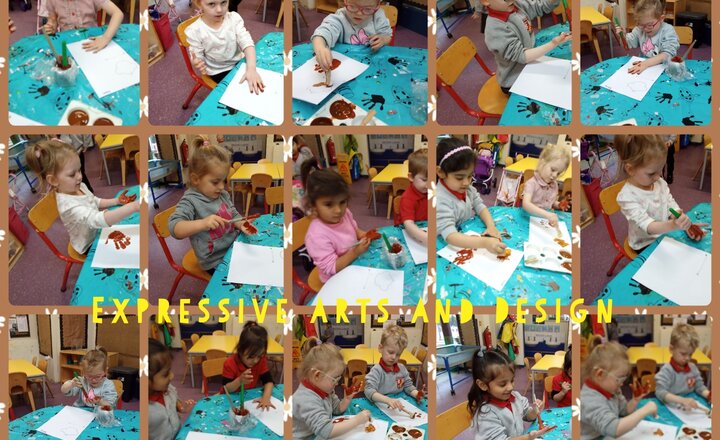
In Pre-School we have been developing our mark making skills in class, using letter join and write dance to support our movements in the rice. Using our finger to mark swirls, rainbow, lines, figure of 8 and many more. The children have the freedom to see marks made in a different way instead of on paper.

Image of Pre-School- Seven Areas of Learning- Continuous Provision
26 Jun

Pre-School- Seven Areas of Learning- Continuous Provision

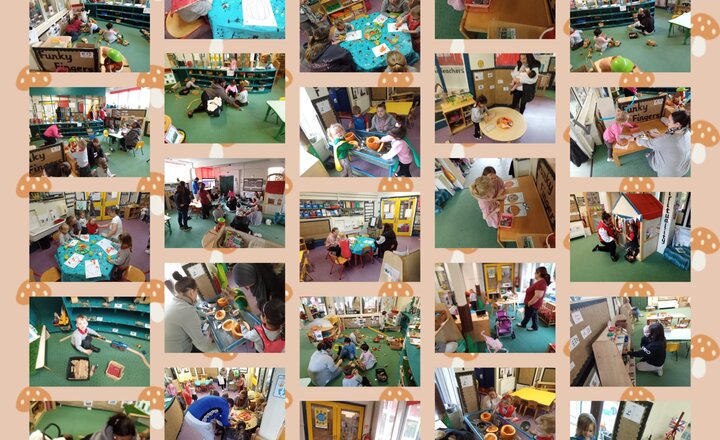
In Pre-School the children learn through play. Exploring the environment with interest to develop their knowledge and understanding and challenge their learning. Each area is designed to engage them to play, making them independent with selecting resources and build on their skills. This week the children have developed their imaginative skills building a bridge in the garden which revisited a story we have covered a while ago. The three Billy goats gruff, remembering parts of the story and using size language when the children crossed the bridge. The children interact with each other pulling them into each other's play and communicating what they are going to do. Building houses together in the construction area and making tea for each other at the malleable table. Developing their mark making skills with different resources and tools to cause different effects.