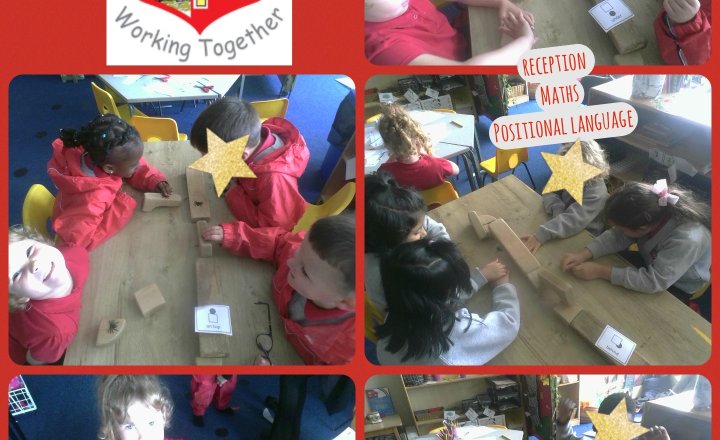
Reception- Maths- Positional Language
This week in Reception we have been developing our understanding of positional language. We created a spider scene and asked the children to place a spider on the blocks. We then took turns using positional language to point out where the spiders were. The children used language such as in front, behind, next to, under and on top. As the week has gone on the children have used this language in their play to describe where objects have been.
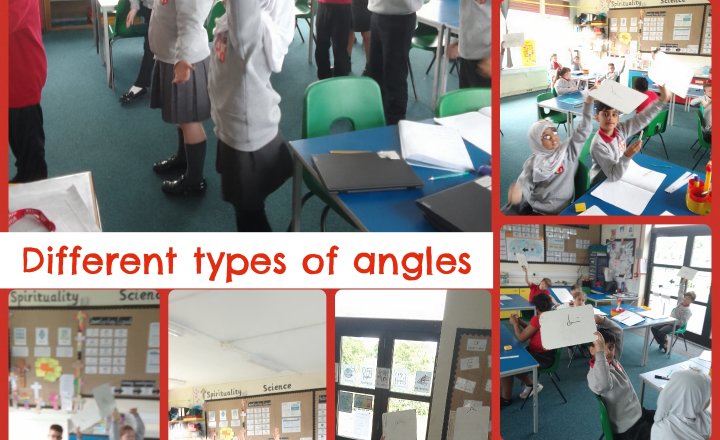
Year 4 Maths - Different types of angles
This week, Year 4 have been learning about the different types of angles during our Maths lessons. We have demonstrated our knowledge in angle quizzes, drawn different types of angles and even danced and sang along with angle songs and an angle rap!
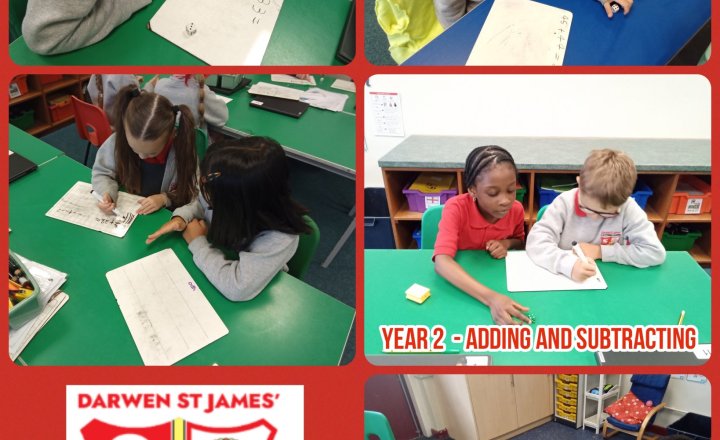
Year 2 - Maths - Adding and Subtracting
Maths Masters in Year 2! In the run-up to assessment week, we have been busy recapping our addition and subtraction strategies. Working in pairs, the children took turns rolling dice to generate their own two-digit numbers to add and subtract. To support our thinking and prove our answers, we drew Base 10 alongside our calculations. It was fantastic to see such brilliant teamwork and mathematical discussion across the classroom.
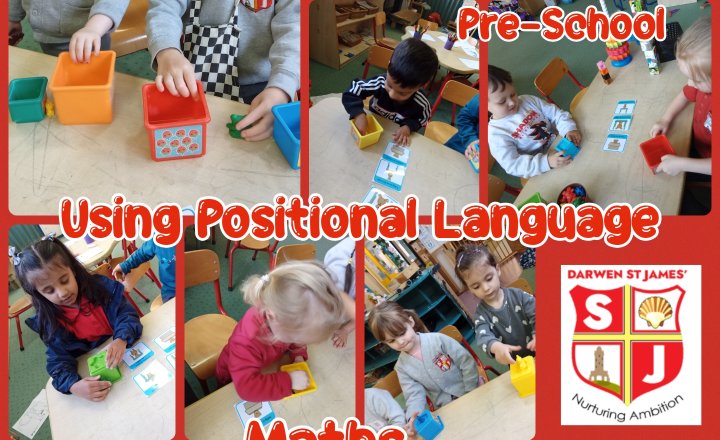
Nursery And Pre-School - Maths - Using Positional Language
This week, our Nursery and Pre-School children focused on developing their understanding of positional language during their mathematics lesson. The session began at the maths table, where the children used coloured bears and small tubs to explore spatial concepts. Using visual picture references as a guide, the children practiced placing their bears in various positions around the tubs, such as inside, next to, or behind. They were then encouraged to name the position of their bear, either speaking independently or repeating their teacher. Following this structured practice, the children took their learning into the wider classroom environment. They independently tested their new knowledge within the continuous provision areas, applying the positional vocabulary to everyday, familiar toys. This hands-on session successfully boosted the children's confidence in both understanding and using mathematical language during play.
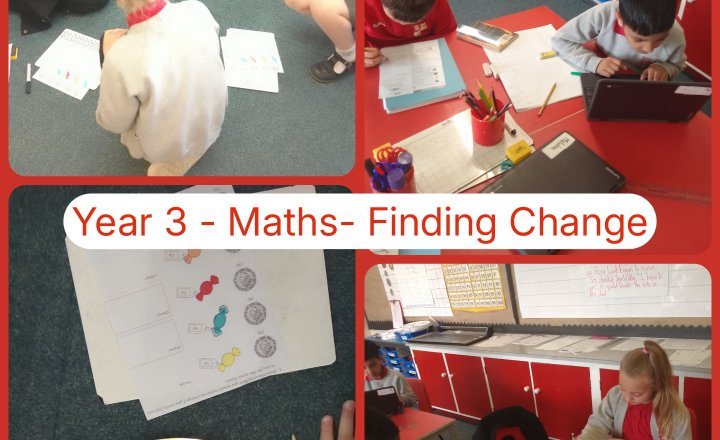
Year 3 - Maths - Finding Change
The Year 3 classroom was transformed into a bustling marketplace this morning as students tackled the practical challenges of money and subtraction. Rather than relying solely on abstract calculations, the class used physical coins and shop items to master the concept of finding change.
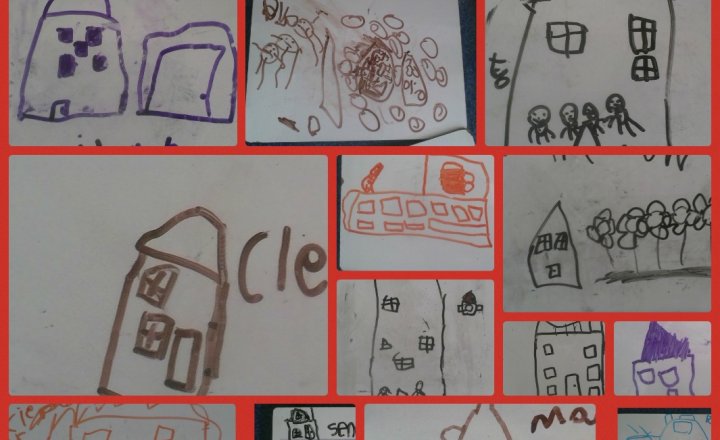
Reception- Maths-Copy 2D shape pictures
Reception have been exploring 2D shapes by designing their very own houses. From spotting properties to purposeful construction on their marker boards, the children used their creativity to bring their maths learning to life.
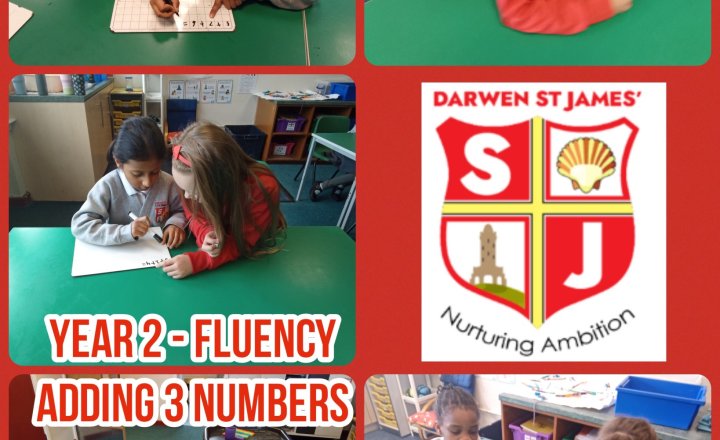
Year 2 - Fluency - Adding 3 Numbers
Year 2 have been sharpening their maths fluency this week by using dice to add three numbers together. The children have been learning to work more efficiently by spotting number bonds or doubles first to make their calculations quicker and easier. After solving a sum, they explained their reasoning to a partner, who then checked the answer and gave feedback. Mrs Cookson was delighted to hear such fantastic mathematical talk and to see the children working so brilliantly together to improve their speed and accuracy!
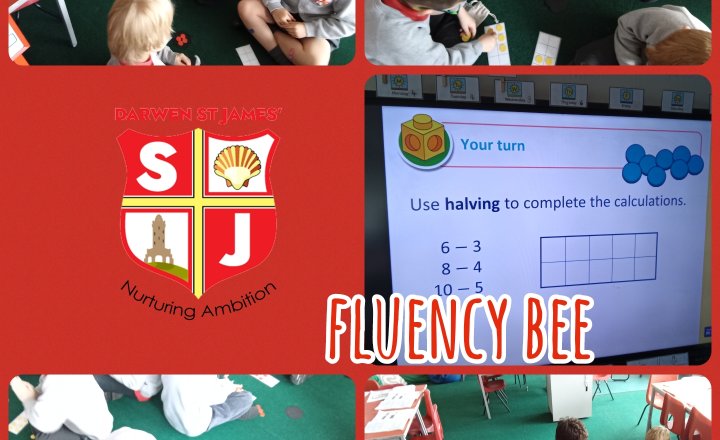
Y1 - Fluency Bee - Finding Half
This week in Y1 the children have been learning about finding half of an object. This has been our focus in maths and Fluency Bee. Using a range of different resources, the children have been exploring finding half of a total number and then representing this using a number sentence.
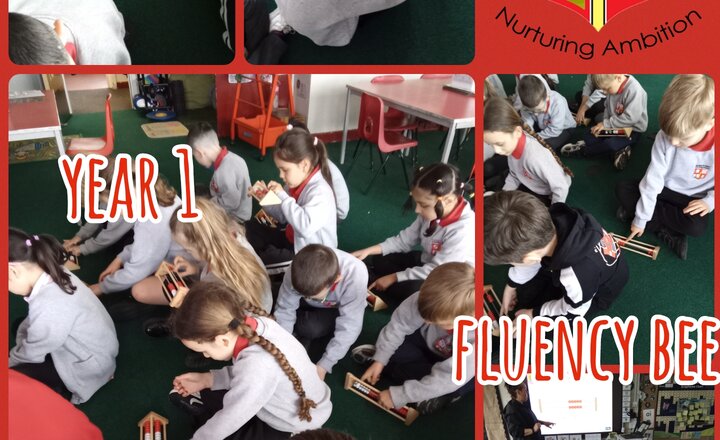
Year 1 - Fluency Bee -Finding Doubles
Year 1 have been using the Rekenreks to support their understanding of finding and representing doubles. The children used the Rekenreks to represent the double number and then we put this into a number sentence. The children also represented the double using their fingers.
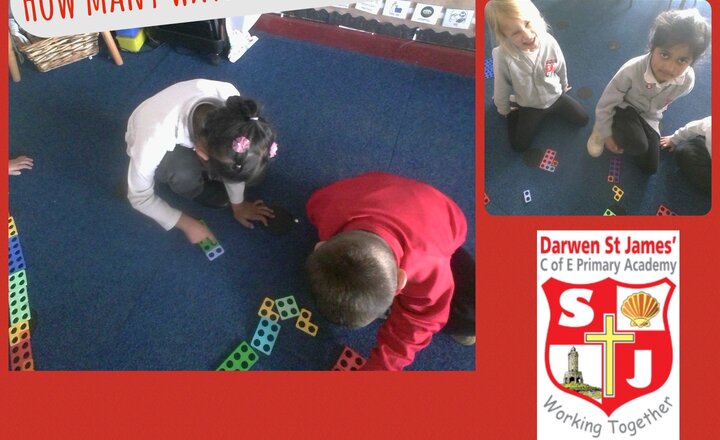
Reception- Maths- How many ways can we make 10?
Our Reception classroom was absolutely buzzing today as the children got stuck into a making ten challenge. With piles of brightly coloured Numicon shapes scattered across the tables, there was a lovely sense of focus in the room. It was wonderful to watch them work it out for themselves. Rather than just looking at numbers on a page, they were using their hands to test their ideas—layering a six and a four or a seven and a three over the big blue 10 plates to see if they fitted. By turning maths into a hands-on puzzle, the concept of adding up really started to click. There was so much excitement as they swapped pieces and shared what they’d found with each other. It didn’t feel like a heavy lesson to them; they were simply playing their way towards a proper understanding of how numbers work.
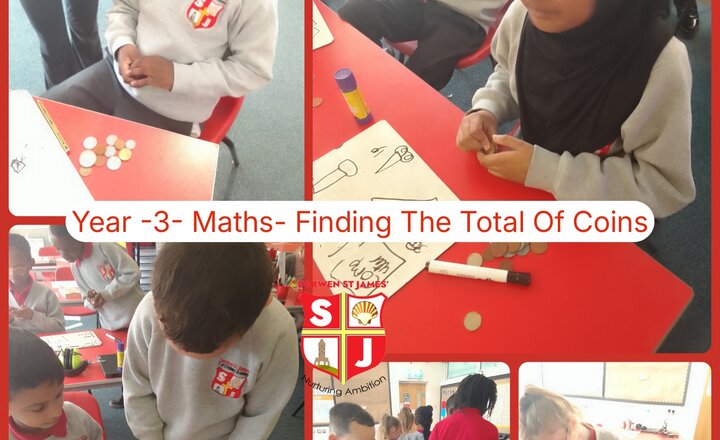
Year 3 - Maths - Finding The Total of Coins
Hands-On Maths: Market Day in Year 3 Our classroom transformed into a bustling marketplace today as Year 3 students put their money skills to the test. Each student designed their own shop on their whiteboard, complete with a variety of items and price tags. Using a collection of coins, students took turns acting as both customers and shopkeepers. This activity provided a practical way to practice: Identifying coin denominations. Calculating totals for multiple items. Determining the correct change to give back after a transaction.
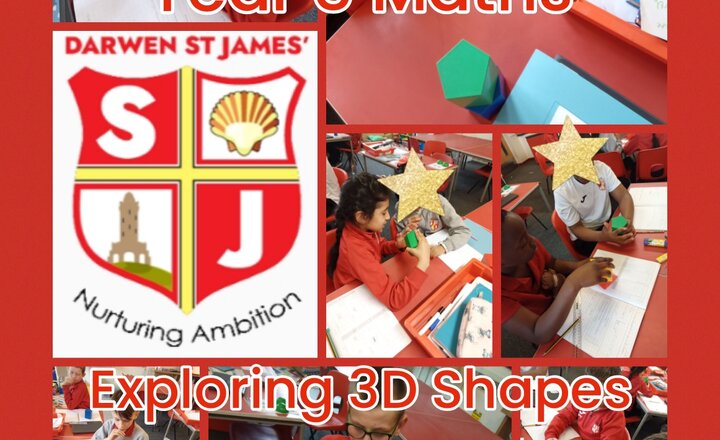
Year 5 Maths - Exploring 3D Shapes
Getting to Grips with Geometry: Year 5 Explore 3D Shapes! Our mathematicians have been busy transitioning from flat planes to the third dimension! After mastering the worlds of angles and polygons, we’ve levelled up our Shape unit by investigating 3D solids. This wasn’t just a lesson from a textbook; it was a full "hands-on" investigation. We filled the classroom with physical shapes, allowing the children to handle, rotate, and examine them from every angle. What we’ve been investigating: Naming Names: We’ve been identifying everything from cubes and cuboids to various pyramids and prisms. The Big Three: Using our tactile models, we’ve been counting and recording the faces, edges, and vertices of each shape. Real-World Connections: Learning how these geometric properties help us understand the world around us. It was brilliant to see the children’s 'aha!' moments as they felt the sharp vertices of a pyramid or traced the long edges of a prism. The level of focus was fantastic—it’s safe to say our students are shaping up to be excellent geometricians!
.png)