.jpg)
Nursery - Geography - Exploring Familiar Landmarks From our Community
The children have been exploring the miniature town setup, demonstrating a strong connection to their immediate world. They eagerly selected toy cars and began to drive them around the roads, navigating between the familiar buildings and landmarks. There was clear recognition of the nursery building and the school, with many children pointing and making excited sounds or simple comments like "My nursery!" or "School!" As they drove, children frequently paused their cars at the images of local shops and statues, initiating conversations or responding to adult prompts about their experiences. They used simple words and gestures to indicate where they had seen these places, showing a developing understanding of familiar geographical features in their community. The activity fostered rich opportunities for communication and language, as children shared their personal connections to the landmarks, such as "I go there!" for a shop, or pointing to a statue and looking for adult affirmation. The interactive nature of driving the cars around the 'town' facilitated active exploration and helped children make tangible links between the models and their real-world experiences.
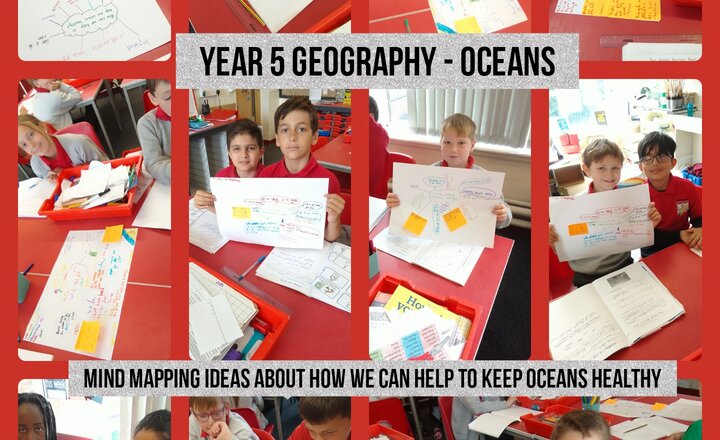
Year 5 Geography - Oceans
In Geography lessons, Year 5 has been delving into the vital topic of oceans. This week, our focus shifted to practical solutions for preventing plastic pollution in our seas. We thoroughly explored ways to reduce our personal single-use plastic consumption and discussed innovative methods for repurposing and reusing plastic items. Building on this crucial understanding, we are excited to visit the seaside next week, where we will investigate our local beaches to assess litter types and quantities, and identify the diverse flora and fauna that inhabit the area.
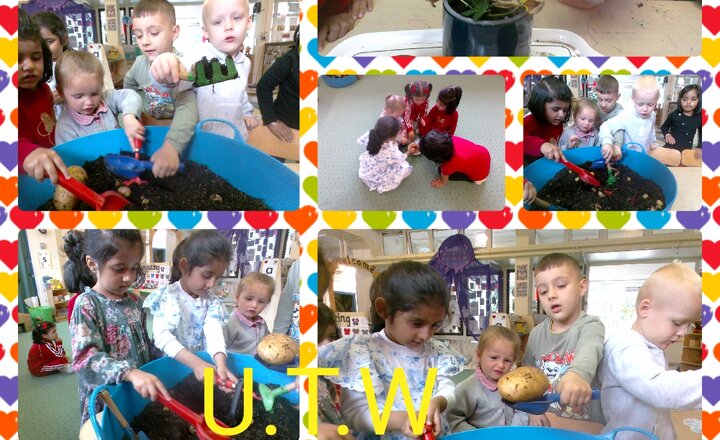
Pre-School-Understanding The World-Harvesting
This week in understanding the world we have been looking at harvesting, What can be harvested?, who harvests them? and why we harvest fruit and vegetables. "Harvesting" in the Early Years refers to engaging young children in activities related to the gathering of crops, fruits, and vegetables. It's a fantastic way to introduce them to concepts of nature, food, and the wider world. Key Learning Areas in EYFS Covered by Harvesting Activities: Understanding the World: The Natural World: Learning about plant life cycles, where food comes from, the importance of water and sunlight, and the role of insects. People, Culture and Communities: Understanding how farms provide food, the concept of a harvest festival, and the idea of sharing and gratitude. Physical Development: Fine Motor Skills: Planting small seeds, picking berries, husking corn, using child-friendly gardening tools. Gross Motor Skills: Digging, carrying baskets, moving around a garden or outdoor space. Personal, Social and Emotional Development: Managing Self: Developing patience as they wait for plants to grow, taking responsibility for caring for plants. Self-Regulation: Sharing tools, taking turns. Building Relationships: Working cooperatively with peers and adults. Communication and Language: Listening, Attention and Understanding: Following instructions for planting and harvesting. Speaking: Describing textures, smells, and tastes of harvested items, discussing what they are doing. Mathematics: Number: Counting fruits, vegetables, or seeds; measuring quantities of soil or water. Shape, Space and Measure: Sorting by size, comparing quantities. Expressive Arts and Design: Creating with Materials: Making fruit/vegetable prints, collages with seeds, designing scarecrows. Being Imaginative and Expressive: Role-playing a farmer or market stall holder. Harvesting Activities for EYFS: Real Garden Harvesting: Planting and Growing: If possible, have a small garden patch where children can plant seeds (e.g., beans, cress, sunflowers) and care for them. The ultimate harvesting experience! Picking: Picking ripe fruits (strawberries, raspberries) or vegetables (peas, cherry tomatoes) they have grown. Root Vegetable Digging: Burying vegetables like potatoes or carrots in a sensory bin filled with soil or compost for children to "dig up."
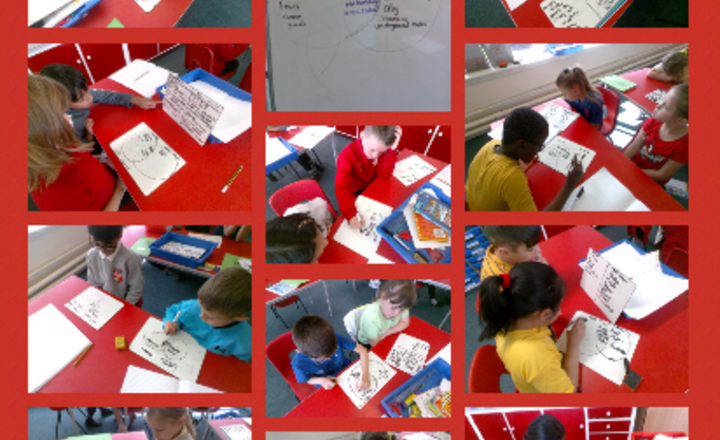
Year 3 Geography - Comparing Different Settlements
Year 3 geography students have been immersing themselves in the study of New Delhi. Today, they took their learning a step further by comparing the natural and human features of New Delhi with those of Darwen.
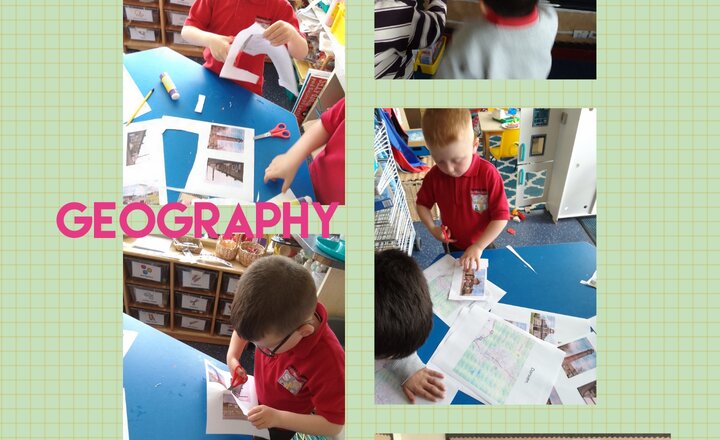
Reception - Geography - Identifying Familiar Places in Darwen
Reception pupils embarked on an exciting geographical adventure today, discovering the town of Darwen through maps and Google Earth. Their exploration took in key landmarks like Darwen Tower and the library, as well as child-initiated points of interest including the church, Iceland, Asda, the leisure centre, and our own school. The highlight for many was locating their houses and sharing their journeys to school, some of which we followed virtually using Google Maps to discuss familiar stops. The children then used copies of the map and familiar landmarks to create their own representations of Darwen.This hands-on experience directly supports their understanding of the world and acts as a fantastic stepping stone towards Year 1 geography.
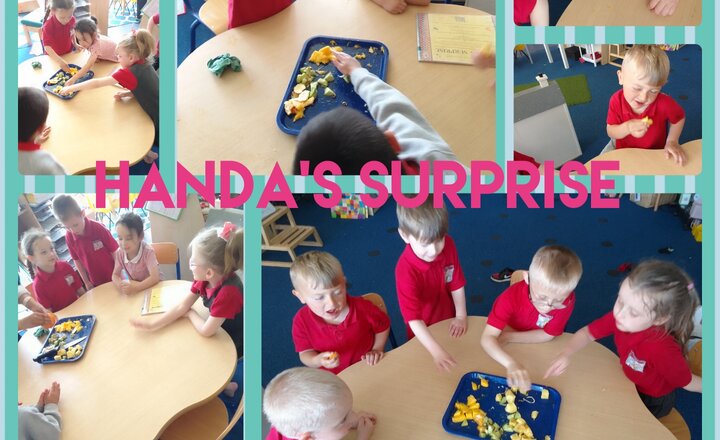
Reception - Handa's Surprise - Fruit Tasting
Our little explorers have been on a taste adventure inspired by "Handa's Surprise"! After reading the story, we explored the real fruits Handa carried in her basket: a creamy avocado, a sweet banana, a juicy mango, a tangy pineapple, and a bright orange. The children used fantastic describing words as they tasted each one. We heard about textures that were "smooth like silk," "bumpy like a road," and "soft like a cloud." Their taste buds had lots to say too – "sweet and yummy," "a little bit sour," and even a few "not so sure about that one!" faces when it came to the avocado! This hands-on activity not only brought the story to life and encouraged rich language development, but it also sparked our inner geographers! We had some great discussions about where these amazing fruits come from around the world, learning about the warm and sunny climates where mangoes and pineapples thrive.
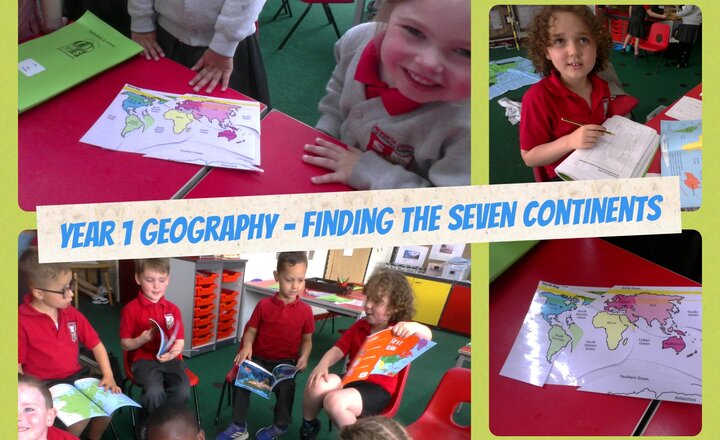
Year 1 - Geography - Finding The Seven Continents
Wow! A great lesson learning about the seven continents of the world. The children played interactive games on the IWB and used a huge map of the world to place the name cards of the seven continents correctly. The children explored the Atlases and found the seven continents. They also learned that each continent is made up of several countries and that the U.K is located in Europe. Great work Year 1!
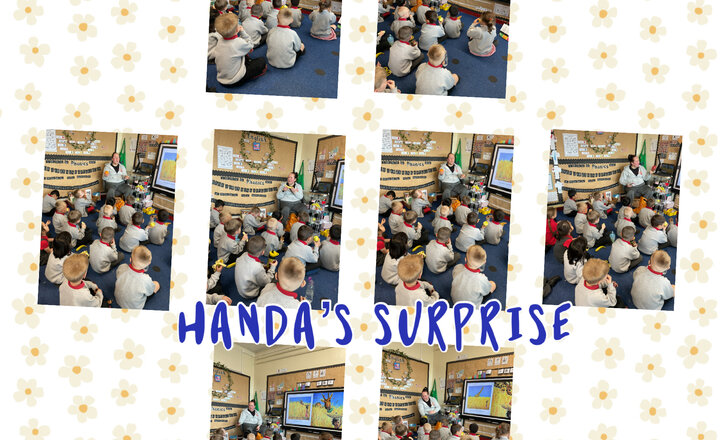
Reception - Handa's Surprise
Our Reception class has been on a delightful journey with Handa's Surprise this week! We've been busy exploring all the wonderful fruits from the story, engaging our senses by discussing how they smell and feel. From the soft skin of the mango to the bumpy texture of the pineapple, the children have been fantastic observers! Next week, the real treat begins – tasting these delicious fruits! We can't wait to see which ones are their favourites. This activity beautifully links to several areas of the EYFS curriculum: English: We've been focusing on story sequencing and developing our vocabulary as we retell Handa's exciting adventure. Geography: We've been learning about different fruits and where they might come from in the world, sparking curiosity about other cultures. Stay tuned for photos of our fruity tasting next week!
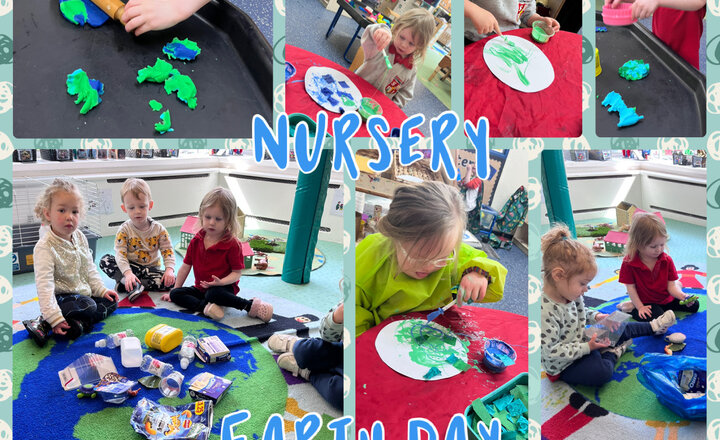
Nursery - Earth Day
Today is Earth Day! To commemorate this day our activity was based on how we look after our world! During this activity, the children demonstrated a clear understanding of where rubbish belongs. When rubbish was scattered in our clean classroom the children pointed and expressed that it needed to go in the bin! Their immediate reaction and verbalisation show strong expressive language skills. The children then worked together to collect and dispose of all the rubbish that had been planted in the classroom, using brilliant observation skills to find every piece of rubbish. At the craft table, the children selected pieces of blue and green tissue paper and attempted to stick them onto the paper using PVA glue. They initially struggled with spreading the glue but persevered, using their index finger to dab and spread it, showing developing fine motor skills. The children made links with the blue area being water and some children made links with animals that they might see living in the water. At the malleable table, the children manipulated the blue and green playdough, using a pinching action to pull off small pieces and moulding them together. When asked what they were making, they replied, "Earth!" Their manipulation of the playdough using pinching, rolling, and splatting showcases developing gross and fine motor skills.
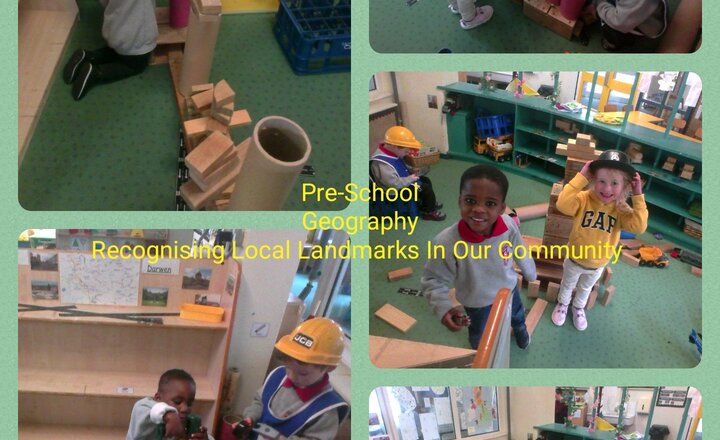
Pre-School- Geography-Recognising Local Landmarks In Our Community
When talking about our community in the small world area, the children talked about Darwen Tower and that they had been to the top. We talked about how we can see the tower from Pre-School and went to look outside. The children then decided to create the tower using the different building blocks in the construction area. The children worked together starting with the big blocks and building on top with the smaller blocks to make the point at the top. Other children joined the task and added paths and bridges so that people could get to the tower.
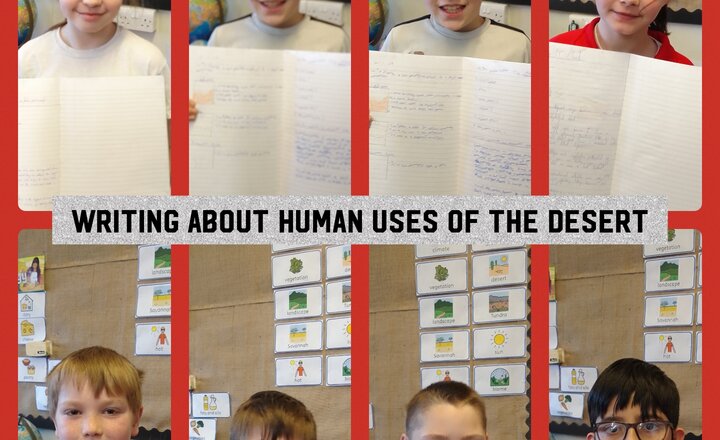
Year 5 Geography: Writing About the Human Uses of the Desert
This week in Geography, Year 5 explored the diverse ways humans utilize desert environments, including mining, renewable energy, tourism, settlements, and farming. To deepen their understanding, they creatively wrote narratives from the perspective of a personified desert, sharing its experiences and observations of these human activities.
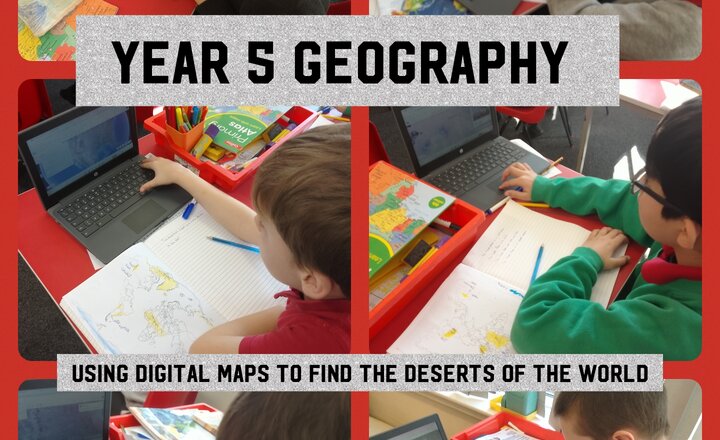
Year 5 Geography - Using Digital Maps to Locate the Deserts of the World
In Geography, Year 5 used digital maps including Google Earth and Google Maps, atlases and printed maps of the world to locate the largest desert on each continent.
.png)