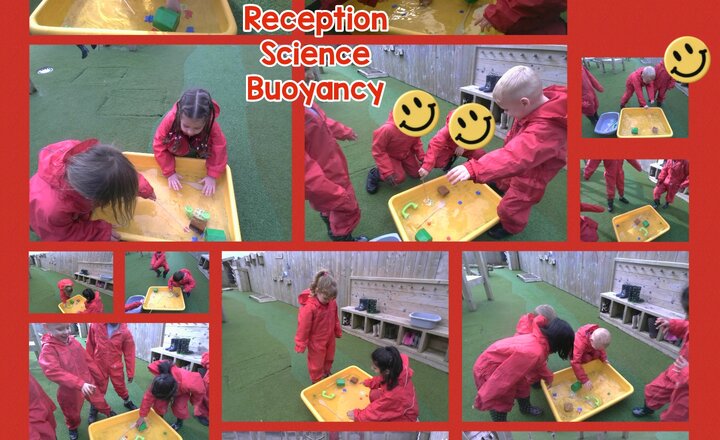
Reception- Science- Buoyancy
This week, our budding scientists in Reception took their learning into the fresh air to dive into the world of buoyancy. Armed with a variety of treasures found around the garden and indoors—from heavy stones and twigs to hollow plastic balls—the children practiced the art of making predictions, eagerly guessing which items would stay on the surface and which would sink to the bottom of the water trays. There were plenty of splashes and cheers as they tested their theories in real-time! Through this hands-on exploration, the children began to grasp the concept of density, discovering that it isn't just about size, but how "heavy" an object is for its size. By comparing how a large, light leaf dances on the surface while a tiny, solid pebble plunges downward, our young learners are already mastering the foundational physics of floating and sinking.
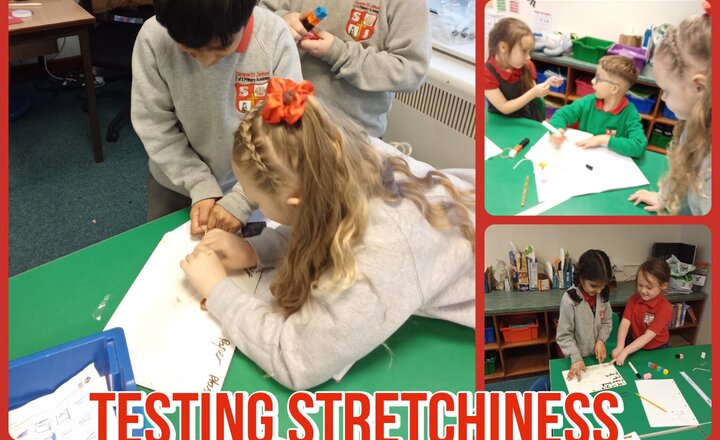
Year 2 Science: Testing Stretchiness
Our Year 2 scientists put materials to the ultimate test! Working in expert teams, we investigated which everyday items have the best elasticity. From paper and string to plastic and rubber, the children used their "fair testing" skills to see which would snap and which would stretch! Brilliant observations and even better teamwork, Year 2!
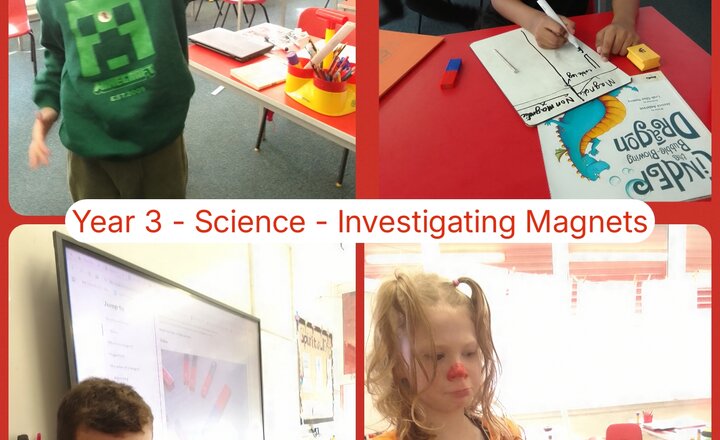
Year 3 - Science - Investigating Magnets
Stuck on Science! Our Year 3 scientists have had a truly "attractive" week! As part of our new science unit, we’ve been diving into the world of magnets and forces. The classroom was buzzing as students tested different materials to see what’s magnetic and what’s not. From paperclips to pennies, we’ve been predicting, testing, and recording our findings like pros.
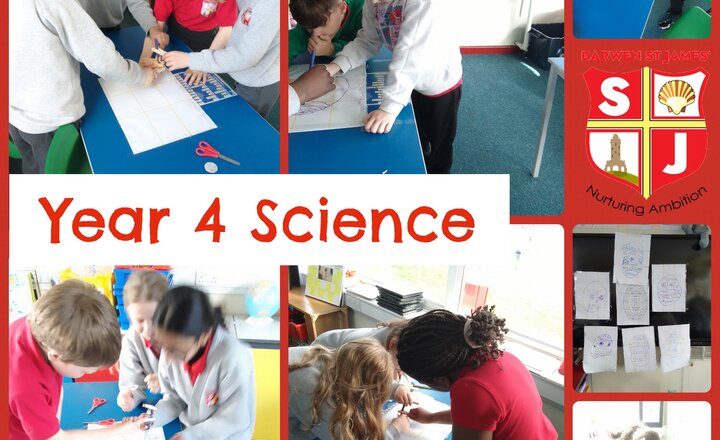
Year 4 Science STEM Challenge
Year 4 had a great Science lesson this week, with a STEM challenge. We had to get in to a 'STEM' mindset, incorporating a wide range of analytical and cognitive thinking skills, critical thinking, complex problem-solving, and creativity. Our group task was an interesting one, but Year 4 approached it with enthusiasm and teamwork, each team managing to complete the challenge. Well done!
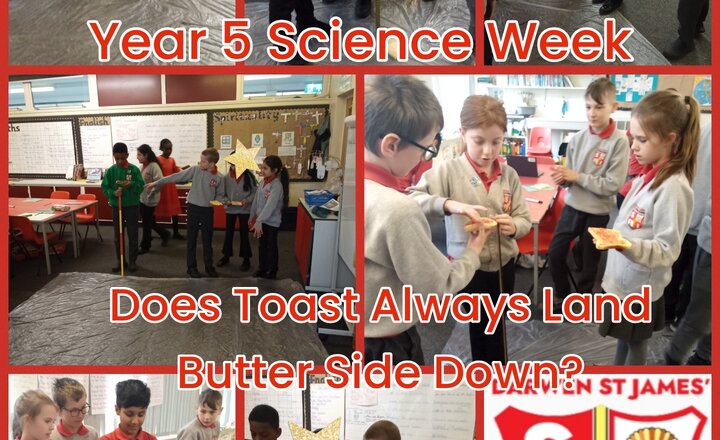
Year 5 Science Week - Does Toast Always Land Butter Side Down?
The Great Toast Tumble: Science or Superstition? If you spotted Year 5 dropping their breakfast on the floor this week, don’t worry—it was all in the name of British Science Week! Our budding statisticians have been investigating the age-old urban legend: Does toast always land butter-side down? To get to the bottom of this "sticky" situation, the children conducted a rigorous investigation using: Variables: We compared thick-sliced vs. thin-sliced bread. The Control: To keep things fair, we used a 'control' slice (unbuttered but marked) alongside our buttered slices. The "Jam" Factor: We even pushed the boundaries of science by adding jam to see if the extra weight or stickiness changed the outcome! The Verdict? After hundreds of drops and careful data recording, Year 5 discovered that the "butter-side down" myth is exactly that—a myth! Our results showed that toast falls completely randomly. Whether it was thick, thin, buttered, or jammed, there was no statistical evidence to suggest it prefers one side over the other. It was a fantastic way to see how statisticians use data to prove (or disprove!) the things we think we know about the world. Well done, Year 5, for some truly "crumbs-tastic" scientific thinking!
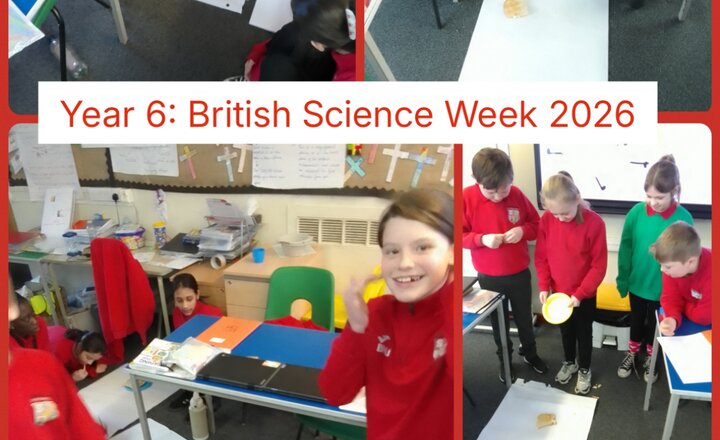
Year 6: Science - Science Week
For British Science week, Year 6 conducted an investigation into Murphy's Law (which states that if something can go wrong, it will go wrong!). We used buttered toast to see which side the toast would land on. Then we thought scientifically about why our findings happened, if they were random, or if there was a reason behind the results.
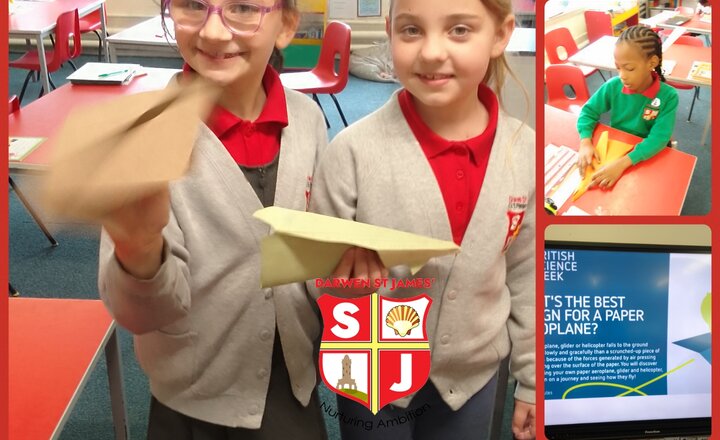
Year 3 - STEM Challenge
Taking Flight in Year 3! Our Year 3 engineers reached new heights this week during an action-packed STEM Challenge! The mission was simple but the science was complex: design and build paper aeroplanes and helicopters, then refine them to see which could travel the furthest distance. The Engineering Process: Initial Prototypes: Students experimented with different wing shapes and body lengths. Testing & Measuring: We took to the "runway" to record our flight distances. The "Tweak" Phase: This was where the real magic happened! Children adjusted their designs—adding paperclips for weight, changing fold angles, or shortening blades—to improve stability and lift.

Nursery / Pre-School - Science - Where Did Dinosaurs Live?
In celebration of National Science Week, the children in Nursery and Pre-School have been investigating the lives of dinosaurs. The lesson was sparked by the children's curiosity as they began questioning where dinosaurs lived and what their environments were like. To help answer these questions, the children accessed the playdough table to create their own dinosaur models. Using image references and Widgits, they worked to identify specific physical characteristics that provided clues about a dinosaur's lifestyle. They looked for features like long necks for reaching high trees, sharp teeth for eating meat, or wings for flying. The children used a variety of resources on the table to mimic these characteristics in their own creations. This hands-on exploration allowed them to move from simple questioning to making scientific connections between an animal's body and its habitat or diet. It was a fantastic way to encourage critical thinking and observation skills while celebrating the wonder of the natural world.
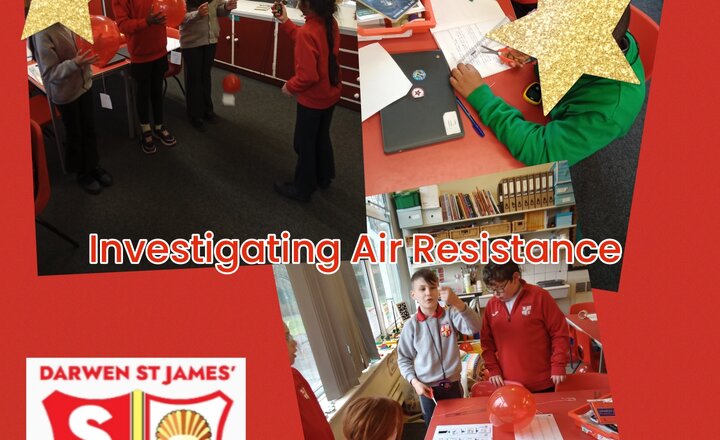
Year 5 Science: Investigating Air Resistance
Science in Action: The Great Balloon Drop! Year 5 turned into flight physicists this week as we explored the invisible force of air resistance. To test how surface area affects the rate of descent, we blew up balloons to various sizes and carefully timed their journey to the floor. There were plenty of predictions (and a few stray balloons!) as we investigated whether a larger surface area creates more "drag" to slow an object down. Our young scientists practiced their fair testing skills by keeping the drop height the same, discovering first-hand how air molecules push back against moving objects. Over to you... If we dropped a flat sheet of paper and a crumpled ball of paper at the same time, which one do you think would hit the ground first, and why? Let us know your theories in the comments!
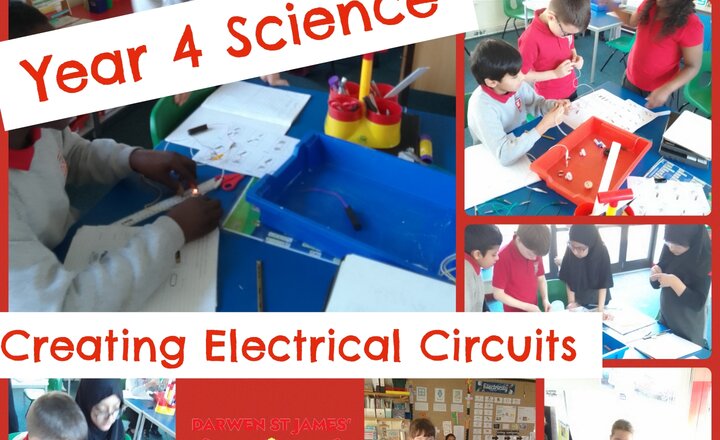
Year 4 Science - Electrical Circuits
Year 4 are studying Electricity in our current topic and have been learning about the names of different types of components and how these come together to make a working circuit. We got to put our knowledge to the test by making our own circuits and testing if they worked! Some of us, even managed to adapt bulb brightness - some very successful circuits made!
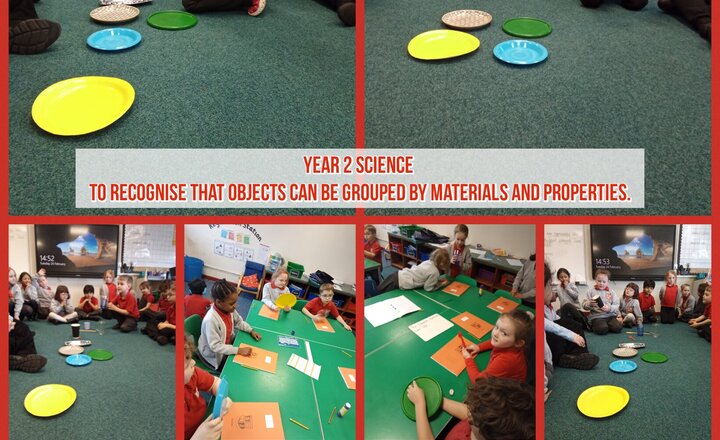
Year 2 Science: Grouping everyday materials based on properties and functions.
Year 2 Material Detectives! Our Year 2 scientists have been busy investigating Everyday Materials this week! The children put their thinking caps on to explore why objects are made from specific materials. We looked at why a plate could be made from plastic, paper and metal but a toy for a baby probably shouldn't be made from glass... What we achieved: Property Experts: We matched materials like wood, plastic, and metal to their uses based on their unique properties. Sorting Stars: We successfully grouped objects by their materials, properties of the materials and functions of the objects. Join in the fun! If you had to build a house out of something from your lunchbox, what would you choose and why? Let us know in the comments! #Year2Science #STEM #PrimaryScience #UKTeachers #MaterialWorld
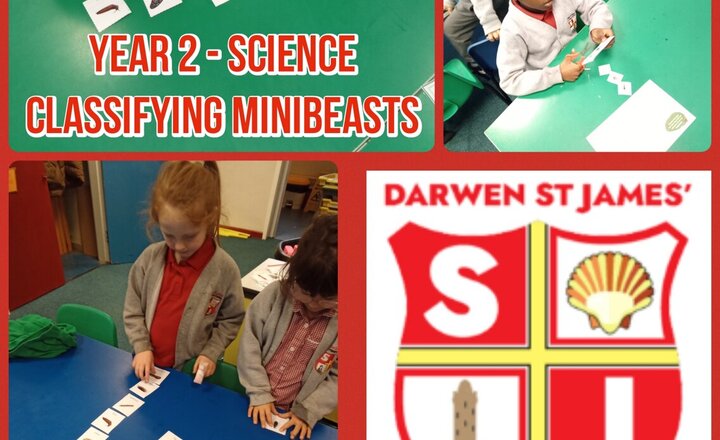
Year 2 - Science - Classifying Minibeasts
Have you ever wondered what truly separates a buzzy bee from a slimy snail? Our Year 2 explorers have been finding out this week as they dived headfirst into the wonderful world of minibeasts! Working in collaborative groups, the children turned into budding taxonomists, using their keen observational skills to sort and classify various creatures based on their physical features. From debating the number of legs on a centipede to identifying which insects boast a pair of wings, the classrooms were buzzing with scientific talk. By categorising their finds into groups like "legs vs. no legs" and "wings vs. no wings," the pupils haven't just learned about biology—they’ve mastered the art of logical thinking and teamwork.
.png)