.png)
Year 1: Independent Challenges
Year 1 have been working extremely hard this week in independent challenges. We have been building Sukkahs using lego, practicing our number formation, writing silly sentences, working on greater than, less than and equal to and putting our phonics skills to the test in our phonics matching game!
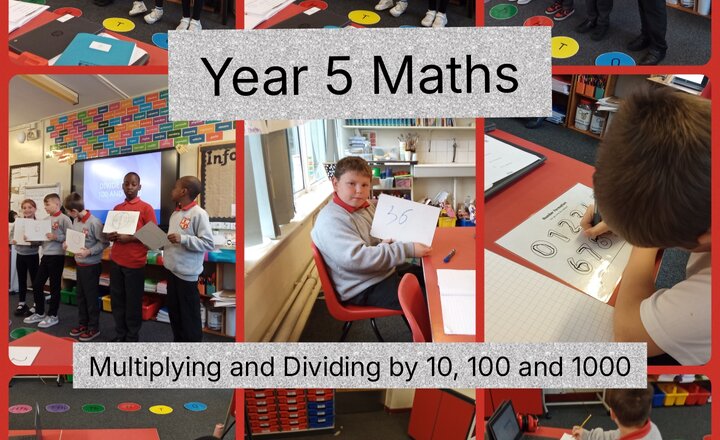
Year 5 Maths - Multiplying and Dividing By 10, 100 and 1000
Year 5 made fantastic progress this week, mastering multiplication and division by 10, 100, and 1,000. To really grasp the concept, we created a human place value chart! Students actively moved across the chart with their digit boards, shifting one, two, or three places and correctly deciding how many zero placeholders were needed. This hands-on, kinaesthetic activity quickly built their confidence, enabling the class to work accurately and independently on all set problems afterward.
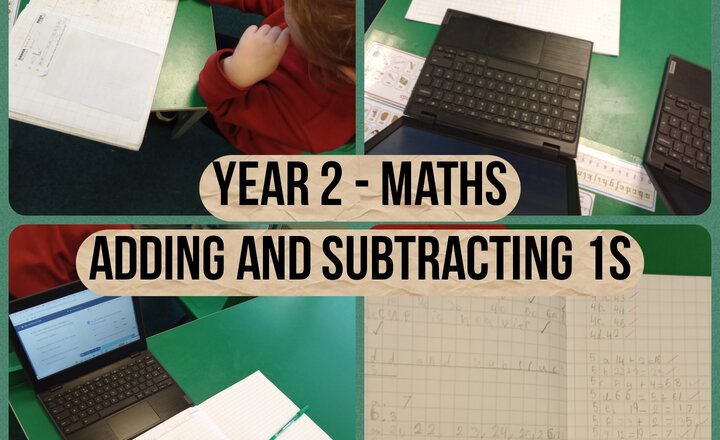
Year 2 - Maths - Adding and Subtracting 1s
Year 2 have been working hard in maths, learning how to add and subtract ones. This lesson was extra special because it was the first time we used Google Classroom on the Chromebooks! The children did a great job navigating the new technology. We also focused on presentation, learning how to use the squares in our books to set out our work neatly instead of using worksheets. A big well done to Year 2 for embracing these new skills!
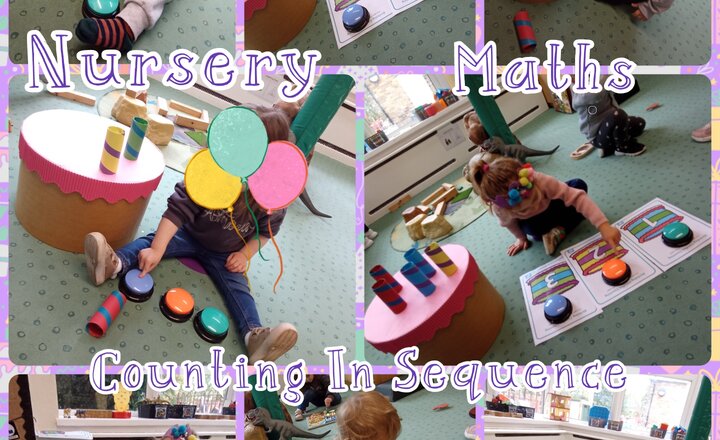
Nursery - Maths - Counting In Sequence
During our maths lesson, the children participated in a fun, hands-on activity focusing on sequential counting and early number recognition using our jumbo birthday cake prop. The main task involved counting and placing candles onto the cake in the correct order, which reinforced the principle of one-to-one correspondence. To support their learning, some children successfully used sound buttons to guide their counting and candle placement. For those demonstrating strong sequential counting skills up to ten, we introduced the visual numerals 1, 2, and 3. They used the sound buttons to support this new knowledge before consolidating it by tracing the numbers with their fingers. This engaging, multi-sensory approach provided excellent practice in both oral counting and linking written numerals to quantity.
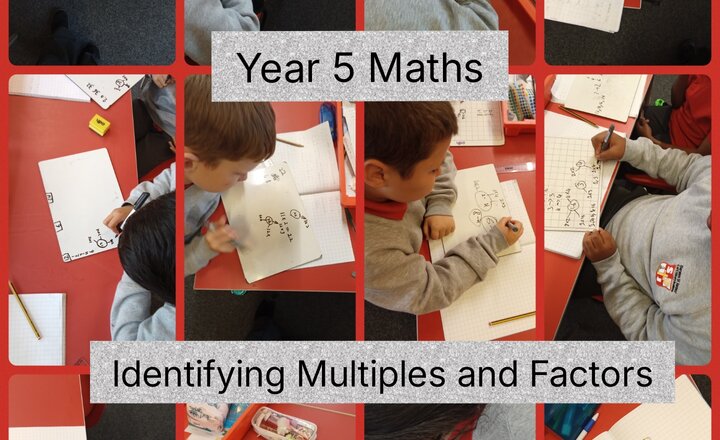
Year 5 Maths: Identifying Multiples and Factors
This week, Year 5 focused on Multiples and Factors in Maths. We started today's lesson with a consolidation activity identifying multiples of various numbers, then challenged ourselves to find the factors for those multiples. This practical exercise solidified the children's understanding of the two distinct concepts. This week's learning has successfully set the stage for finding common factors—a crucial skill they'll use throughout Year 5 and in future mathematics.
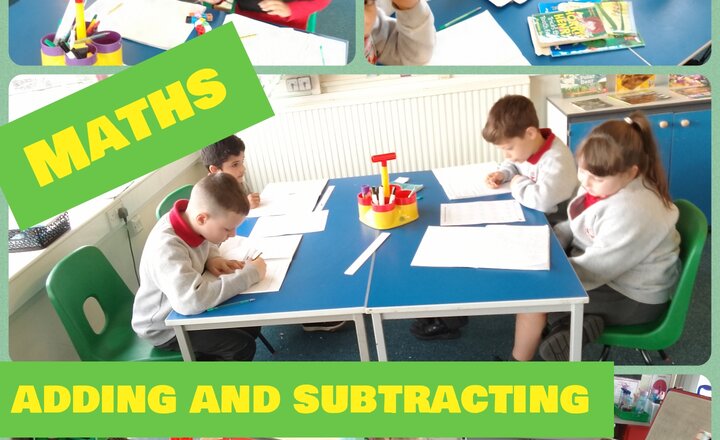
Year 4 Maths - Adding and Subtracting
Year 4 have been extending their knowledge of adding and subtracting numbers and have worked really hard when exchanging, or needing to change the place value of the numbers within their sums. We have also been practising making sure that we have set out our problems correctly to ensure the correct answer is obtained. Lots of counting skills have been displayed and Year 4 have demonstrated their skills well!
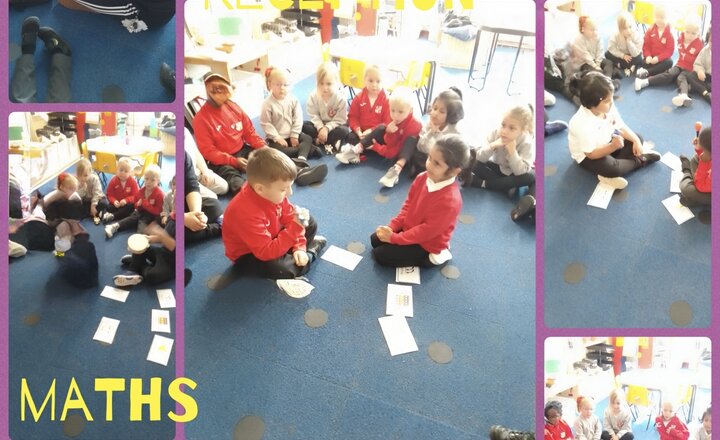
Reception Maths – Repeating Patterns
Our Reception children have been exploring repeating patterns through hands-on activities linked to White Rose Maths. They worked together to spot, copy, continue and create their own patterns using everyday objects. The children loved working practically – sorting, building and chatting about what they noticed. These activities not only help develop early mathematical understanding, but also encourage turn-taking, reasoning and careful observation. Learning through play is such a big part of our EYFS curriculum, and it’s lovely to see the children so engaged and confident as they explore new mathematical ideas!
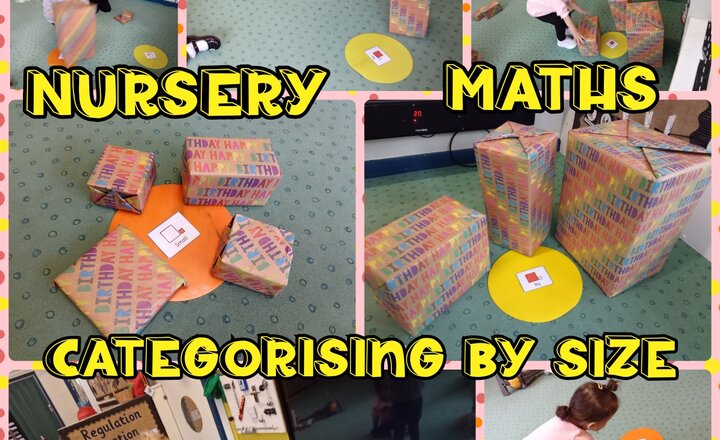
Nursery - Maths - Categorising By Size
In this engaging maths lesson, the children focused on the concept of size by helping our book character, Lulu, with her birthday presents. Their initial excitement involved giving the wrapped gifts a good shake and guessing what might be inside! The main objective of the lesson was categorization by size. The children actively helped Lulu sort all the gifts into two distinct piles: big and small. Taking turns, each child eagerly chose a present and correctly placed it into the appropriate category. To support their learning and vocabulary acquisition, we utilized sound buttons and Widgit visual aids. These resources were instrumental in helping the children differentiate clearly between the terms "big" and "small." The children demonstrated a brilliant understanding of size differentiation and did an excellent job accurately sorting all of Lulu's gifts. This hands-on activity provided a fun, tangible way to reinforce early measurement concepts.
.png)
Year 1 - Independent Challenges
We have had a fantastic week so far completing independent challenges! These vary from completing a 'colour and write' phonics challenge, to building a school using lego!
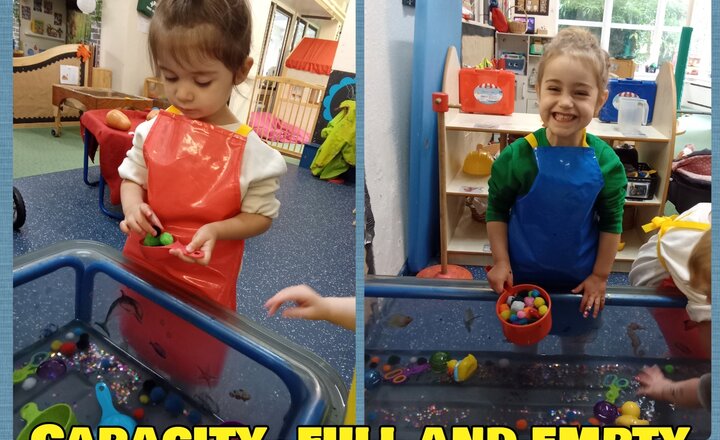
Nursery - Maths - Capacity, Full And Empty
In our maths lesson this week, the children engaged in a hands-on and sensory-rich exploration of capacity. Using a variety of different-sized jugs, along with water and pompoms, they had the opportunity to physically investigate a fundamental mathematical concept. The children enthusiastically scooped up both water and pompoms, which allowed them to learn through different textures. They quickly discovered that filling a jug with liquid was different from filling it with solid objects. As they worked, they were continuously testing their knowledge of full and empty. They had to decide when their jug was full and what to do when it was still empty.
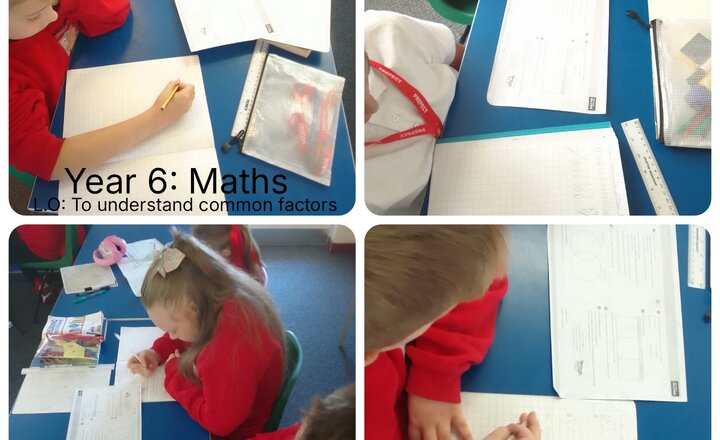
Year 6: Maths - Understanding Common Factors
Year 6 have been using their times tables knowledge to find factor pairs of increasingly large numbers. This will help us when we move on to looking at written methods for multiplication and division.
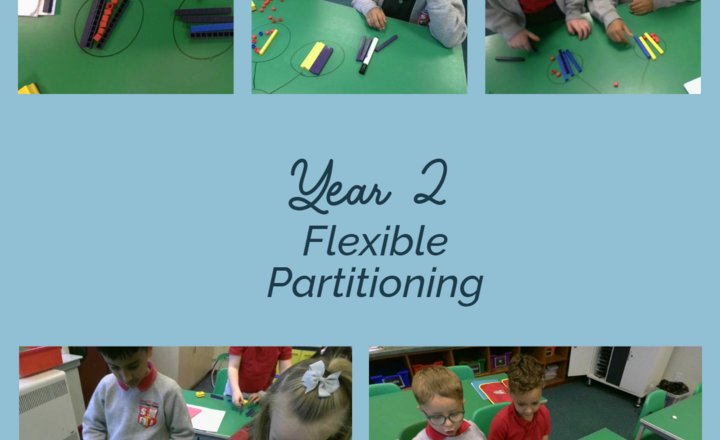
Year 2 - Maths - Flexible Partitioning
Year 2 have been busy in maths, extending our knowledge of partitioning numbers! We've moved beyond just tens and ones to discover that there are so many more ways to split a number. This is called flexible partitioning. Instead of only thinking of 23 as 20 and 3, we now know it can also be 10 and 13, or even 15 and 8. We're getting much more confident with this new skill, which helps us with our mental maths and problem-solving!
.png)